Brijuni National Park is a 14-island archipelago 2 km off Istria's west coast, reached only by the park's own boats from Fažana near Pula. Roman ruins, 200-plus dinosaur footprints, a safari park of diplomatic gifts and Tito's Cold War summer residence all share one flat, green island.
Brijuni National Park is a 14-island archipelago in the northern Adriatic, 2 km off the west coast of Istria across the Fažana Strait, just north of Pula. Declared a national park in 1983, it protects 3,395 hectares — and only 743 of them are land. The rest is sea. Nearly everything worth seeing sits on Veliki Brijun, the largest island at 5.6 km².
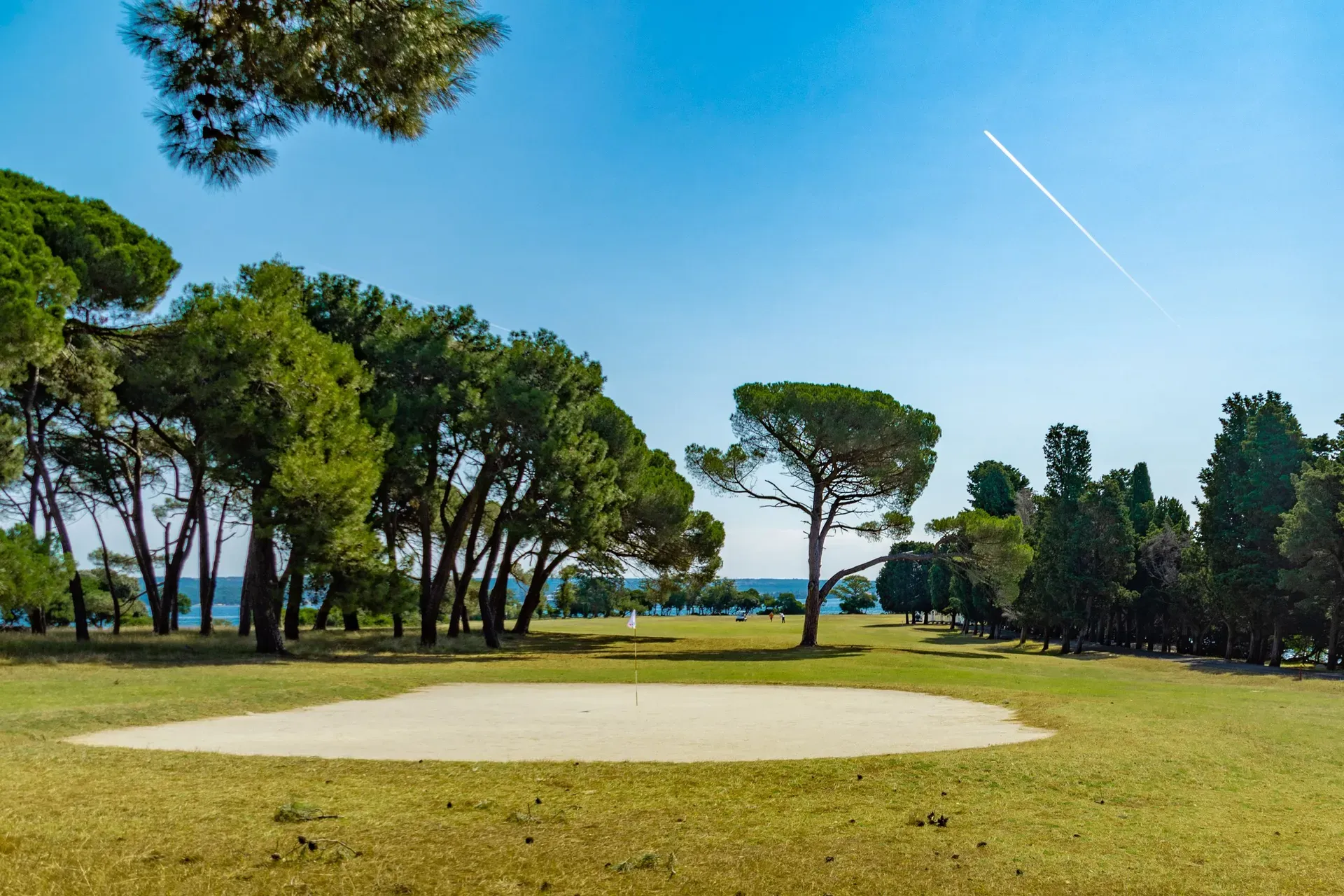
That one island packs in more variety than most parks manage in total. Flat clipped meadows run between holm oak woods, umbrella pines and olive groves. A safari park holds zebras and an Indian elephant on the northern meadows, Roman temple ruins stand in Verige Bay, a Byzantine castrum and a 1,600-year-old olive tree sit near the harbour, and more than 200 dinosaur footprints survive on the capes. The only way in is the park's own boat — no private cars, no bridge, no alternative operator.
What makes Brijuni unlike any other Croatian national park is the 20th century. From 1947 the islands were the summer capital of Yugoslavia, where Josip Broz Tito received around 100 foreign heads of state and, in July 1956, met Nasser and Nehru to draft the declaration behind the Non-Aligned Movement. The standard visit runs about four hours on a combined boat-and-train ticket — €50 in summer, €35 the rest of the year. Dinosaurs to Cold War diplomacy on one flat, walkable island. Nowhere else in Croatia stacks eras like this.
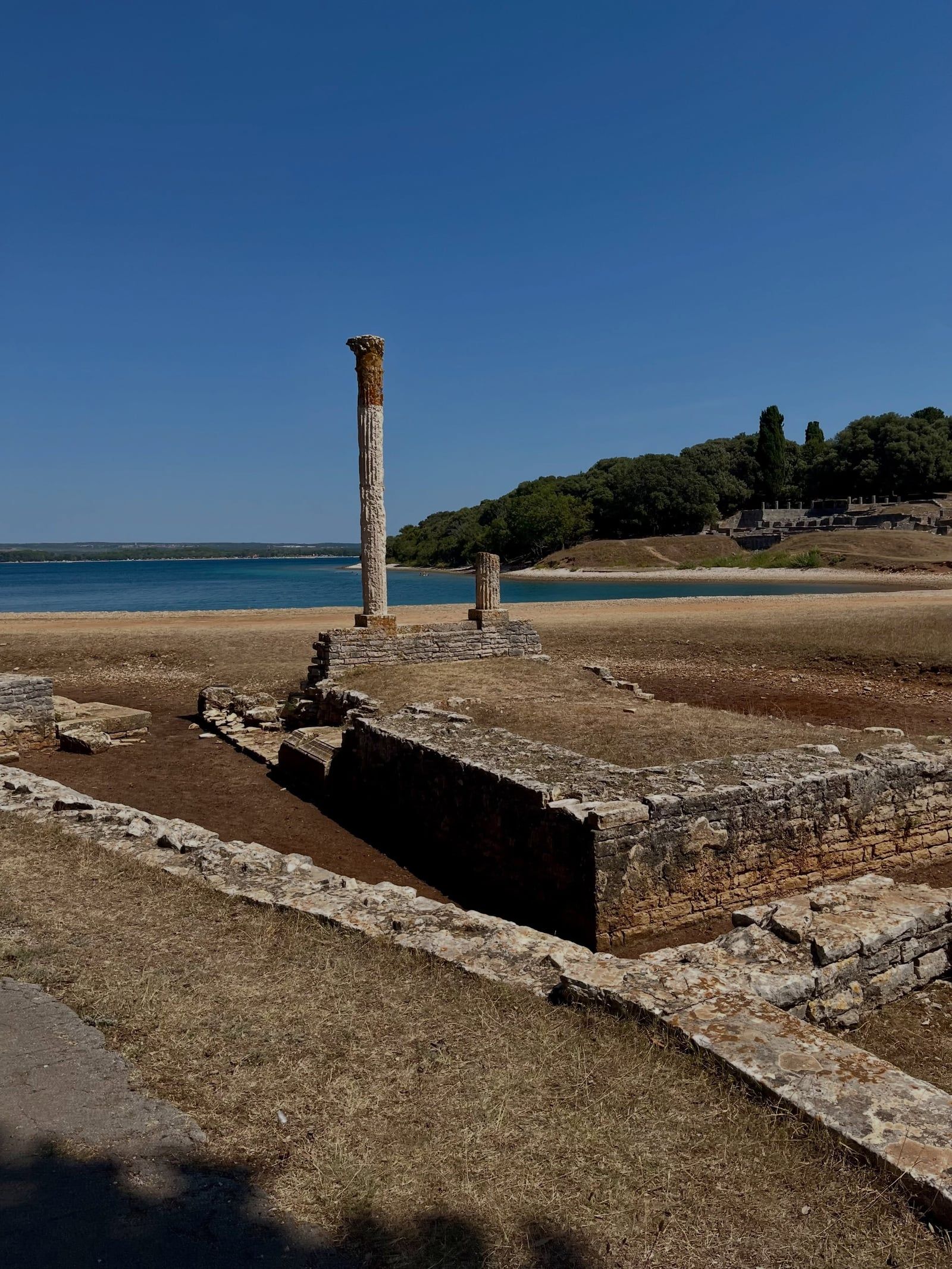
Romans built here first. A villa rustica went up in Verige Bay in the 1st century BC, with temples to Neptune, the Capitoline Triad and Venus, and floors laid in mosaic, fresco and marble. A Byzantine castrum followed in Dobrika Bay, stacking strata from the Roman republic through Byzantium to Venice, with St Mary's Basilica beside it — its rectangular apse is rare for the period. The Greeks knew the islands as Pollariae. The Venetians, who took over from 1331, knew them mainly as a quarry.
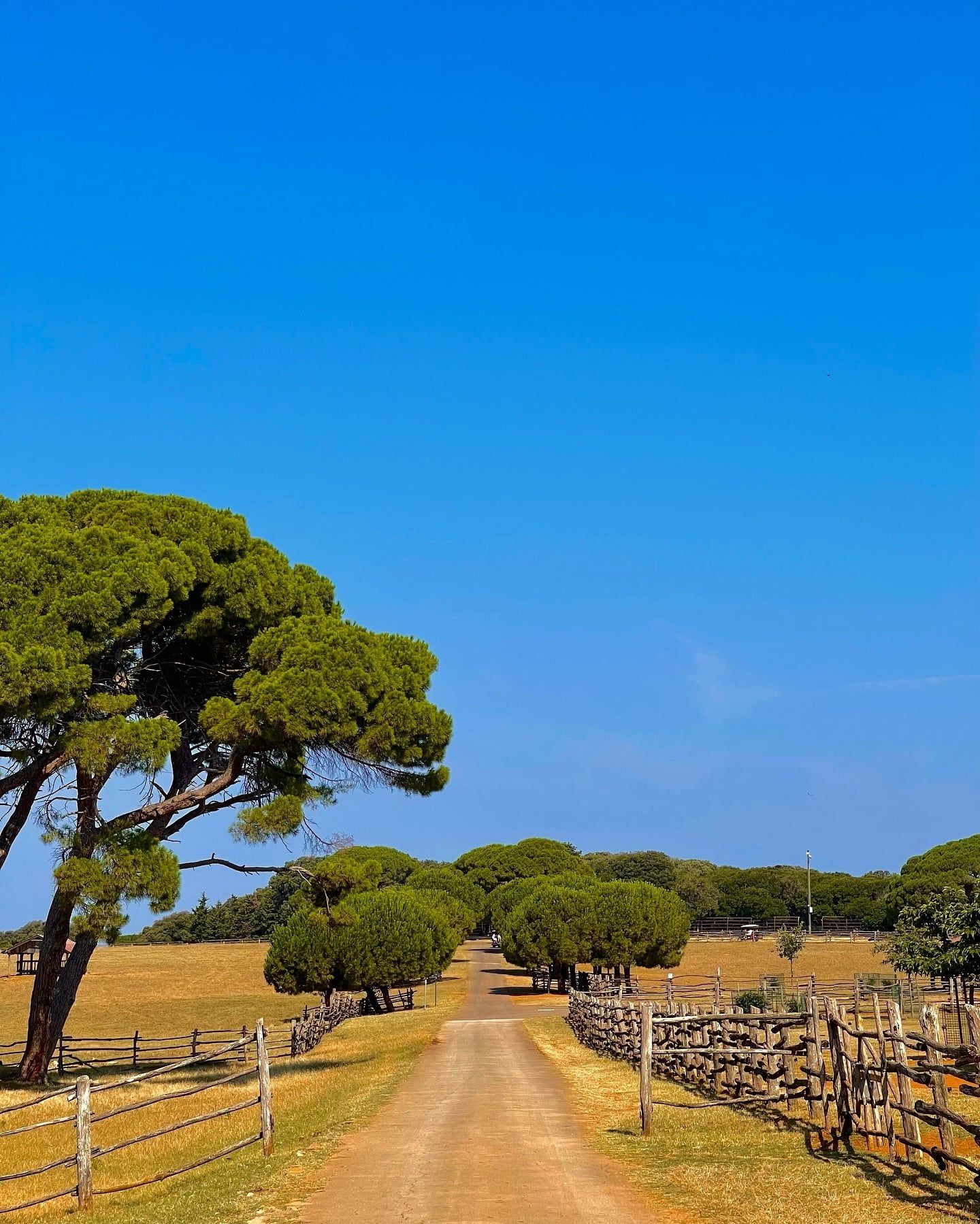
By the late 19th century the archipelago was malarial and nearly empty. Austria had taken it in 1815 and built Fort Tegetthoff on Veli Brijun, and in 1893 Viennese magnate Paul Kupelwieser bought the islands whole. He brought in Robert Koch — later a Nobel laureate — whose mosquito work got malaria declared eradicated in 1901, plus forester Alojz Čufar, who planted the holm oaks and umbrella pines still shading the paths. Within a decade Brijuni was a fashionable resort with one of Europe's earliest designed Mediterranean parks.
After WWI the islands passed to Italy; in 1945 they went to Yugoslavia. Josip Broz Tito turned them into his state summer residence, with the White Villa official from 1953, and over the following decades around 100 foreign heads of state came to stay. In July 1956 Tito met Egypt's Nasser and India's Nehru here to sign the Brioni Declaration, the groundwork for the Non-Aligned Movement.
Tito died in 1980. On 1 November 1983 the islands were declared a national park, and in 1991 Brijuni hosted one last negotiation, the Brioni Agreement. Today the Tito-era buildings hold museums, his dark-green 1953 Cadillac sits on display with 18,000 miles on the clock, and since 2001 the Austro-Hungarian fortifications on Mali Brijun have housed the open-air Ulysses Theatre. The park closes to individual visitors in January and February; the rest of the year, boats leave Fažana daily.
Brijuni is low limestone. The highest point, Vela Straža, reaches just 55 m, and the 14 islands share 46.8 km of coastline across 3,395 ha of protected land and sea. Veliki Brijun is flat enough that the whole sightseeing circuit — safari park, Roman villa, museums, olive tree — involves no real climbing. That's rare for a Croatian national park, and the reason the visit works for elderly travellers and small children.
The plantings mix wild and designed. Over 400 plant species grow on the islands, from holm oak woods and olive groves to a Mediterranean garden holding more than 160 autochthonous and exotic species. Underwater, seagrass meadows feed loggerhead turtles and bottlenose dolphins work the strait. On the rocks, the oldest residents left footprints: over 200 dinosaur prints from 130–100 million years ago survive at four sites, with a life-size theropod reconstruction standing by the shoreline tracks at Cape Ploče and Cape Vrbanj. A three-toed print sits in a limestone block right by the port. Most visitors walk straight past it.
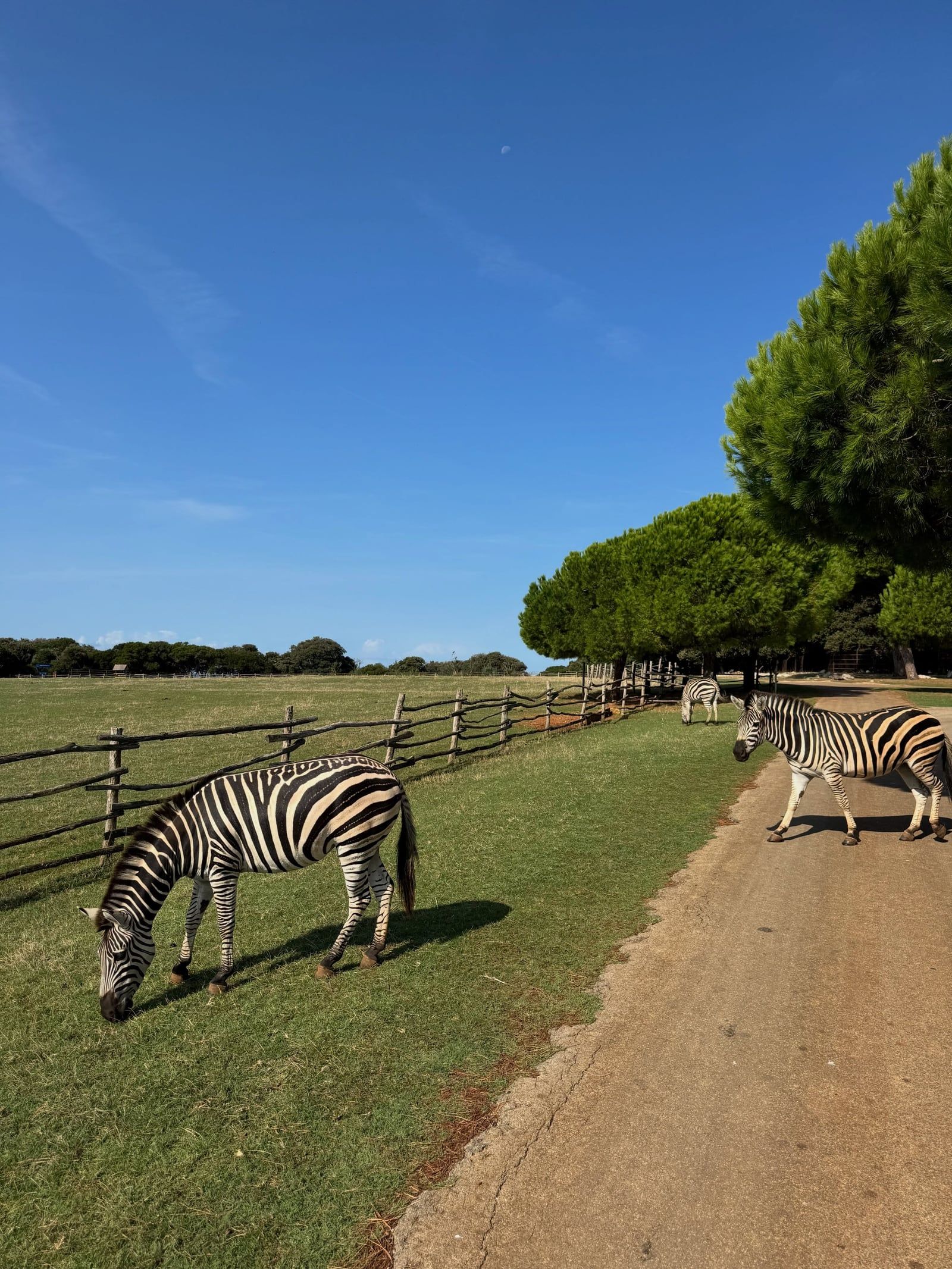
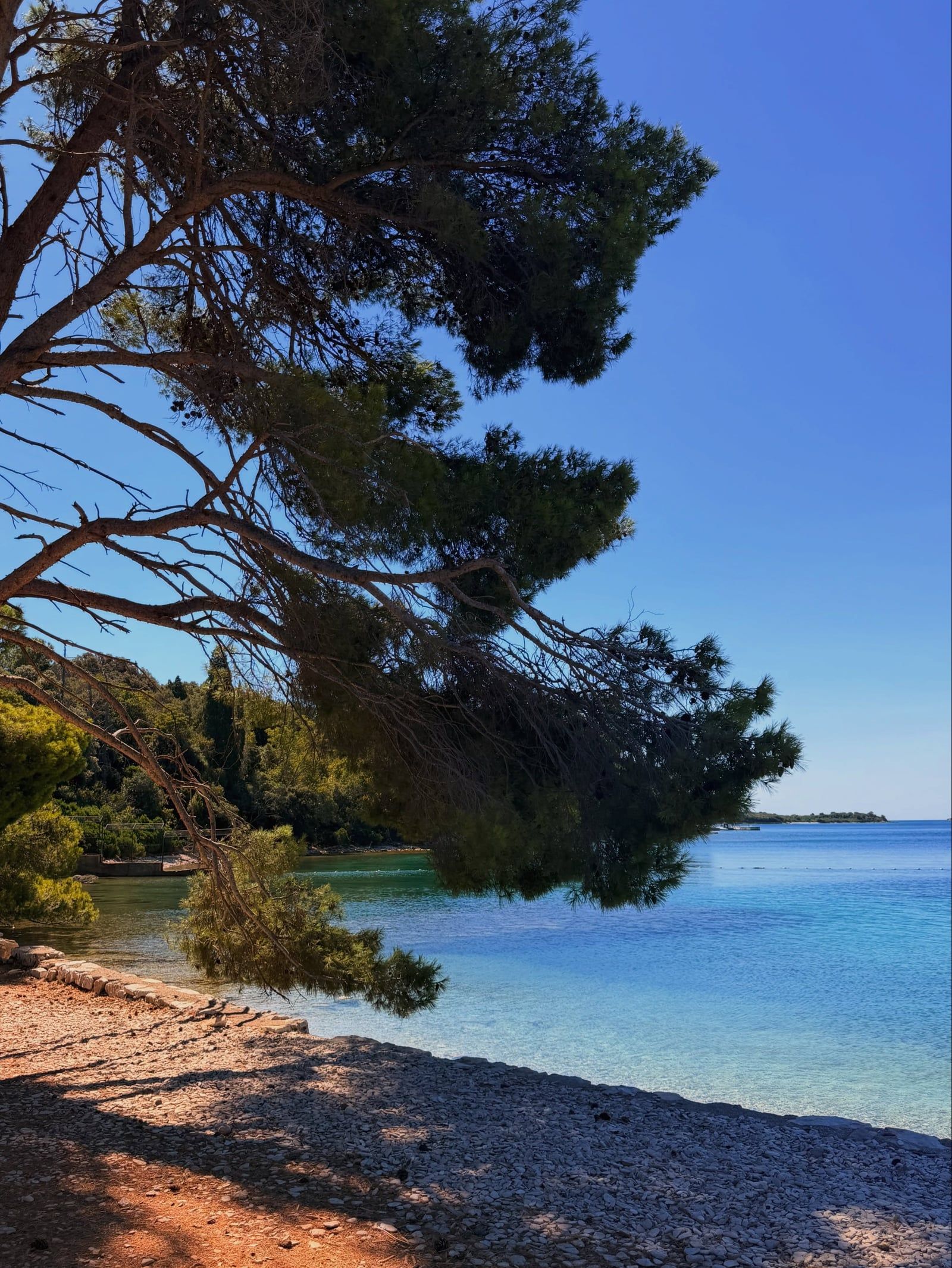
The safari park spreads across 9 ha of northern meadow with about 80 herbivores — zebras, zebu, an Indian elephant — most of them originally diplomatic gifts, while peacocks wander the harbour lawns freely. In Verige Bay the 1st-century BC villa rustica still shows its temple foundations, and the park runs a guided snorkel tour over the submerged parts of the complex. Swimmers end the day at Saluga beach or on car-free St Jerolim, an island that has banned single-use plastic and runs an educational underwater trail.
Brijuni's strangest cultural layer is diplomatic. During Tito's 35 summers here, the islands received presidents, kings and tsars from 60 states across 90 meetings, and the animals they brought now form a Cold War gift catalogue you can walk through: Nehru's zebu from 1959, Sékou Touré's zebras from 1960–61, Indira Gandhi's elephant Lanka from 1972. Koki, the cockatoo Tito gave his granddaughter for her ninth birthday, still talks and shakes hands at around 70.
The July 1956 meeting of Tito, Nasser and Nehru produced the Brioni Declaration, the document that laid the groundwork for the Non-Aligned Movement — signed a few hundred metres from where tourists now eat lunch. In 1991 the islands hosted the Brioni Agreement, one more negotiation for the list.
Today the islands draw performers rather than politicians. Since 2001 the Austro-Hungarian fortifications on Mali Brijun have housed the Ulysses Theatre, founded by actor Rade Šerbedžija, whose summer revival of King Lear has played to audiences including Vanessa Redgrave, Annette Bening and Angelina Jolie; the Podium chamber-music festival runs alongside it. The 1,600-year-old olive tree, carbon-dated by Zagreb's Ruđer Bošković Institute in the 1960s, still yields about 30 kg of olives a year, pressed into 4.1 kg of extra-virgin oil — a piece of Roman Istria you can taste. Fažana, the departure town, fills its waterfront cafés with waiting visitors twelve times a day in summer.
The olive tree on Veliki Brijun was carbon-dated by Zagreb's Ruđer Bošković Institute to about 1,600 years old. It split in a 1970s storm, was patched with concrete, and still produces roughly 30 kg of olives — pressed into 4.1 kg of extra-virgin oil — every year.
More than 200 dinosaur footprints from 130–100 million years ago survive at four sites on the islands. A three-toed print sits in a limestone block right by the main port, and most visitors walk straight past it.
Lanka, the Indian elephant in the safari park, arrived in 1972 as a gift from Indira Gandhi. The zebras came from Guinea's Sékou Touré in 1960–61, and the zebu was Nehru's gift in 1959.
Koki, a yellow-crested cockatoo Tito gave his granddaughter for her ninth birthday, still speaks and shakes hands with visitors at around 70 years of age.
Tito's dark-green 1953 Cadillac, a gift from Croatian immigrants in Canada, has only 18,000 miles on the clock. It carried guests including Nasser, Nehru and Haile Selassie until 1979.
Owner Paul Kupelwieser brought Nobel laureate Robert Koch to the malarial islands in the 1890s. Koch's mosquito-control work got malaria declared eradicated on Brijuni in 1901.
At €50 for a summer adult ticket, Brijuni charges the steepest standard admission of any Croatian national park — above Plitvice's peak rate of about €40 and above Dubrovnik's city walls.
A combined ticket covering the return boat from Fažana, the tourist train, the safari park and the museums costs €50 per adult from 1 June to 30 September, and €35 from October to May. Children 7–18 pay €20 / €15, and under-7s go free. A self-guided version with the Brijuni Pocket Guide app is slightly cheaper at €40 / €30.
No. The only public access is the park's own boat from Fažana, a 15-minute crossing of about 2 km — private cars aren't transported and no other operator runs. In January and February individual tickets aren't sold at all; visits are arranged for groups only, on request.
Yes. The self-guided ticket (€40 June–September, €30 October–May, €15 / €13 for children 7–18) includes the same return boat and unlocks the sights through the Brijuni Pocket Guide app. You explore on foot or rent a bike or electric car on the island — the park keeps around 300 bicycles.
On 1 November 1983, three years after Tito's death in 1980. The islands had been his state summer residence since 1947, when they became part of Yugoslavia following the Italian period after WWI.
Yes, on Veliki Brijun. The safari park's roughly 80 herbivores include Lanka the Indian elephant, a 1972 gift from Indira Gandhi, zebras from Guinea's Sékou Touré and a zebu from Nehru. Peacocks roam the island freely.
Yes — over 200 footprints, left 130 to 100 million years ago, survive at four sites. The main viewing spots are Cape Ploče and Cape Vrbanj on Veliki Brijun, where a life-size theropod reconstruction stands beside the shoreline prints.
Yes, with a €15 dog ticket, but dogs are barred from the safari park, the tourist train and the museums — so the self-guided option is the practical choice for dog owners. Dogs must not roam freely, and aggressive dogs need a muzzle during boat transfers and sightseeing.
Only at designated beaches such as Saluga, or on car-free St Jerolim island. The park's dress code bans swimwear outside beach zones — you can't board the boat or enter restaurants, cafés or hotels in a swimsuit, so pack a cover-up.
Personal photography is free across the park except in the protected zone managed by Croatia's Ministry of Defence. Commercial shoots need park permission requested at least 15 days in advance, and any aerial photography also requires a State Geodetic Administration permit — so no recreational drones.
The return boat crossing, a roughly one-hour tourist-train circuit with a stop at the Roman villa in Verige Bay, entry to the safari park, the permanent exhibitions, the Mediterranean garden, the 1,600-year-old olive tree, plus insurance and VAT. The whole excursion runs about 4 hours end to end.
Browse verified tours with free cancellation and instant confirmation.
Find Tours