A 15-minute boat from Fažana lands you on an archipelago where a 1,600-year-old olive tree still fruits, zebras gifted by Guinea's president graze the safari meadows, and over 200 dinosaur footprints sit 2 km from the mainland. Veliki Brijun was Tito's summer residence — the 1956 Brioni Declaration was signed here — and the one ticket price covers the boat, the tourist train, and the Roman villa in Verige Bay.
Find Guided ToursFourteen low-lying islands sit 2 km off Istria's west coast, across the Fažana Strait from the fishing town of Fažana, just north of Pula. Declared a national park in 1983, Brijuni covers 3,395 hectares, and most of it is sea — only 743 hectares is land. The terrain is flat limestone; the highest point, Vela Straža, barely reaches 55 m. You get there only by the park's own boats, a 15-minute crossing from Fažana.
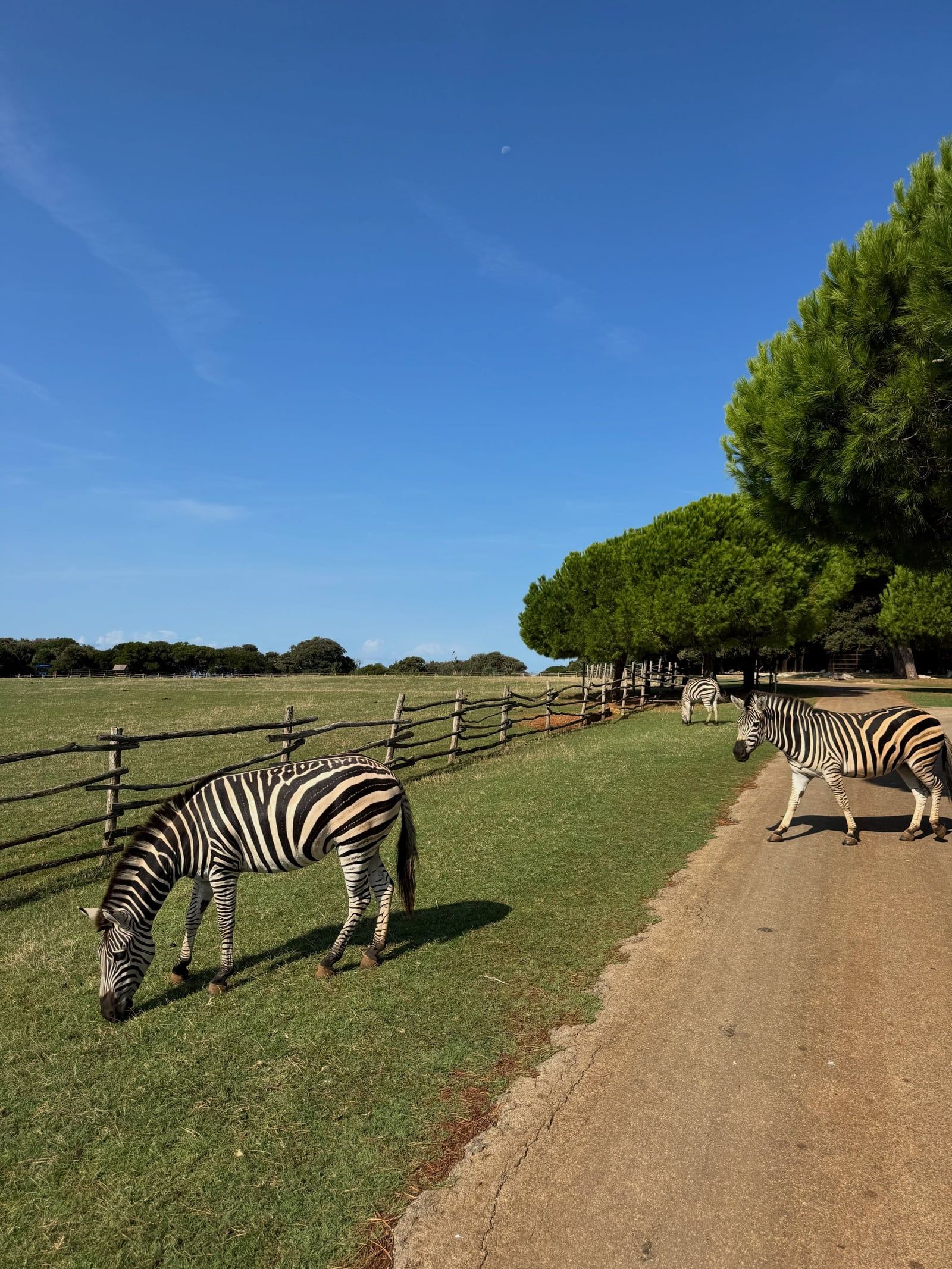
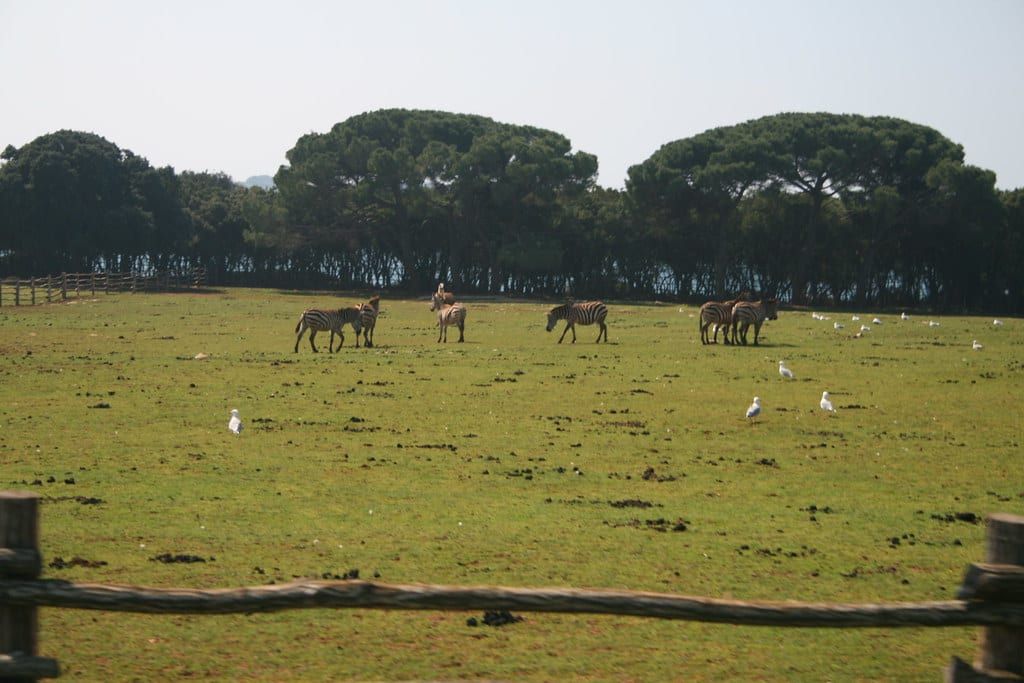
The strangeness starts on the main island, Veliki Brijun. Zebras and an Indian elephant named Lanka roam 9 hectares of northern meadow — most of the roughly 80 safari-park herbivores arrived as diplomatic gifts to Tito. Lanka came from Indira Gandhi in 1972; the zebras from Guinea's Sékou Touré in 1960–61. Elsewhere on the island, a 1,600-year-old olive tree still produces about 30 kg of olives a year, and more than 200 dinosaur footprints from 130–100 million years ago survive at four sites. In the surrounding water, seagrass meadows feed loggerhead turtles and bottlenose dolphins.
The Greeks knew the islands as Pollariae. Venice quarried them from 1331; Austria took them in 1815. In 1893 Viennese magnate Paul Kupelwieser bought the malarial archipelago and, with Nobel laureate Robert Koch — malaria was declared eradicated in 1901 — turned it into a fashionable resort.
After WWII, Tito made the islands Yugoslavia's state summer residence. Around 100 foreign heads of state visited, and in July 1956 the meeting of Tito, Nasser and Nehru here produced the Brioni Declaration, groundwork for the Non-Aligned Movement. In 1991, the islands hosted the Brioni Agreement. Few protected areas carry this much layered history in so few square kilometers.
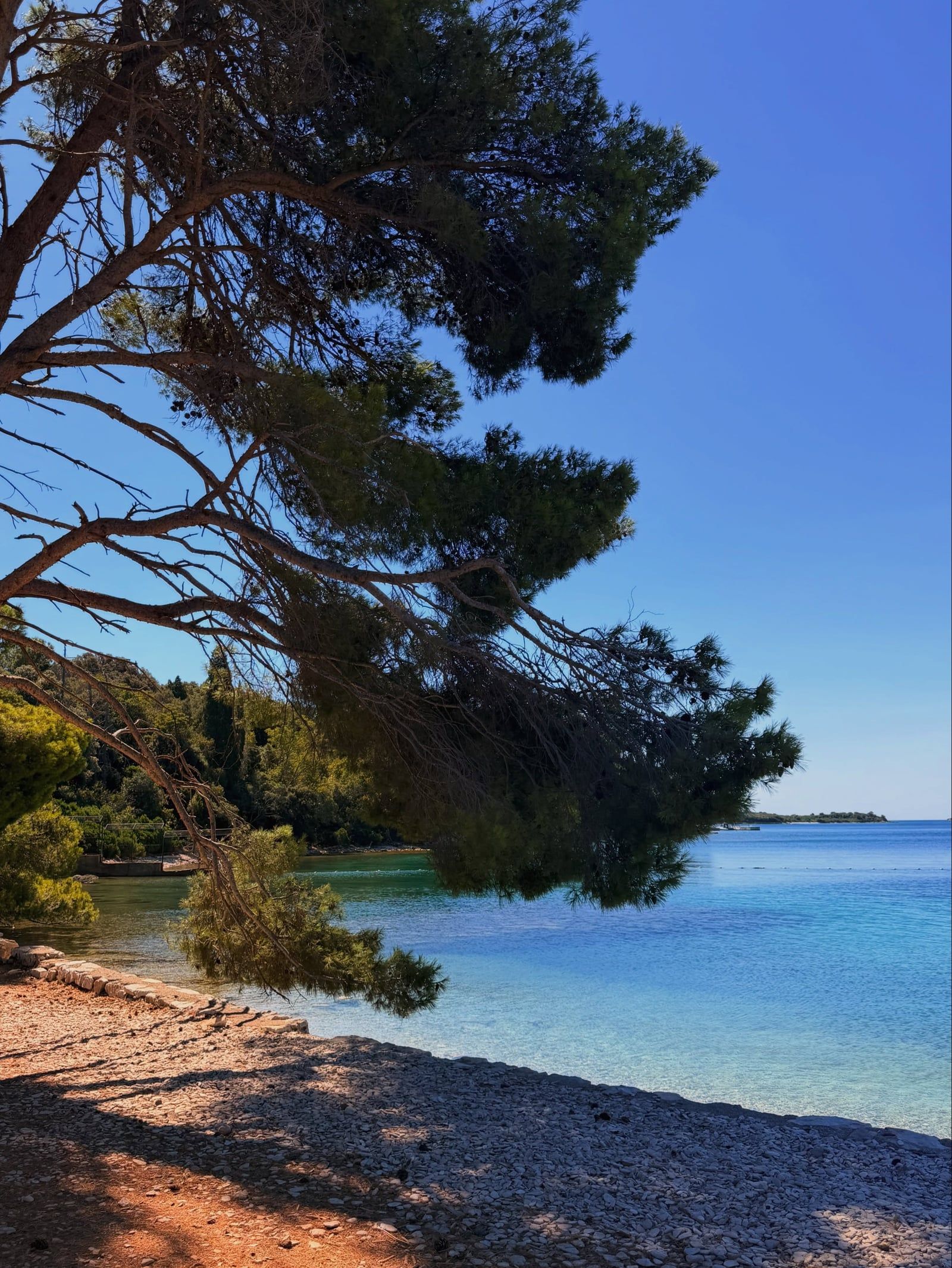
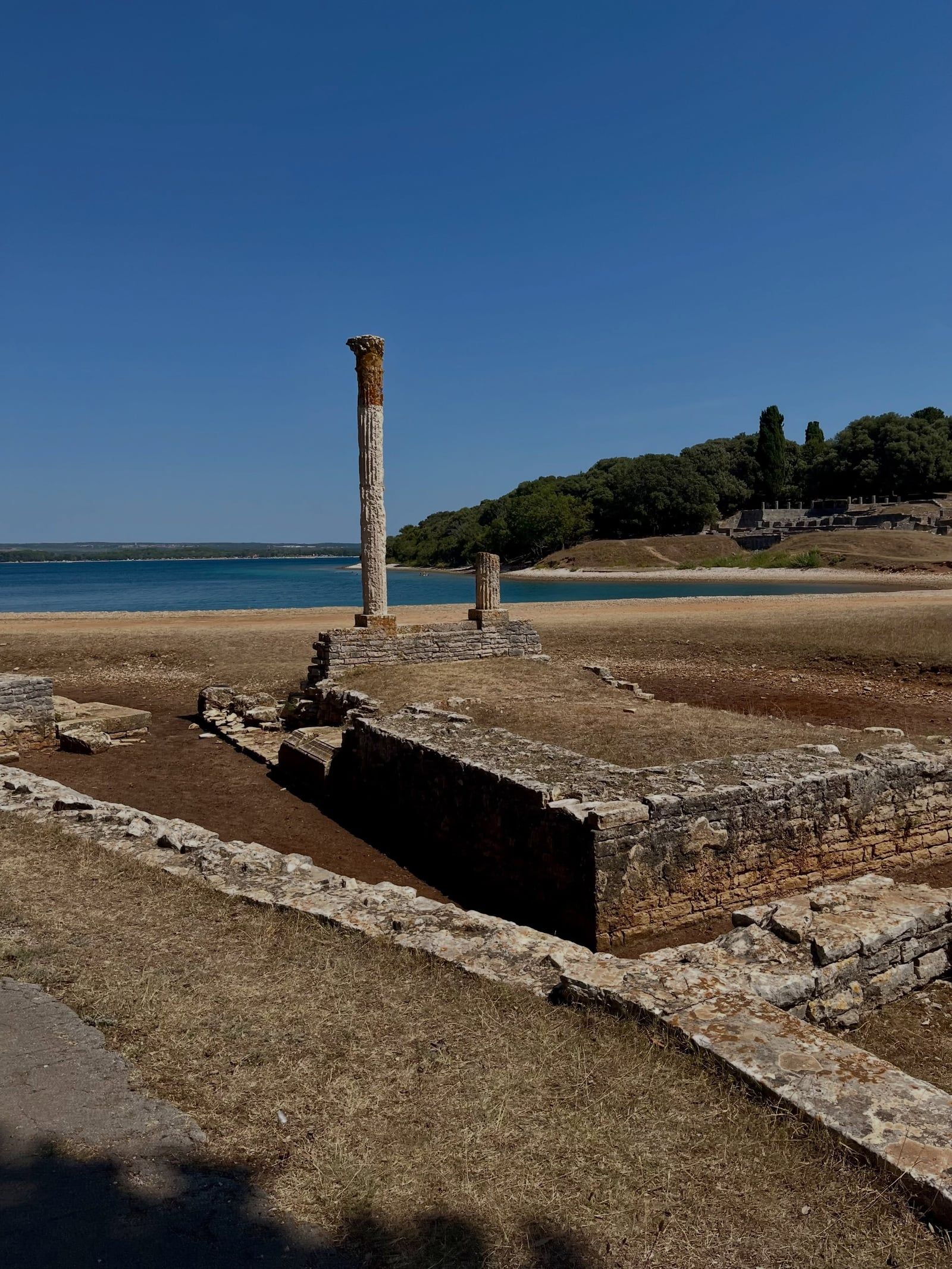
Discover the full history and cultural significance on our About page.
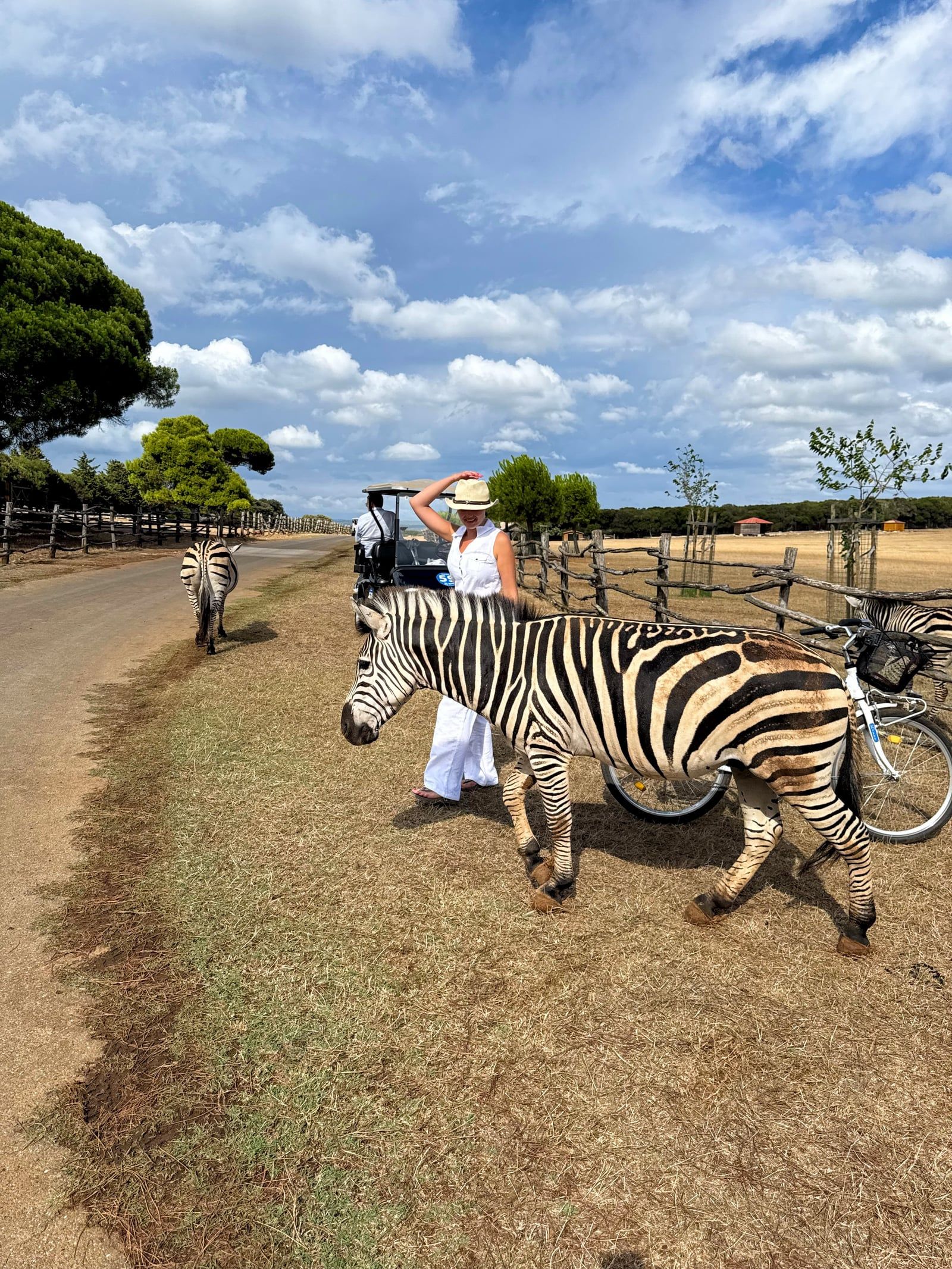
Roughly 80 herbivores roam 9 hectares of northern meadow on Veliki Brijun, and most arrived as Cold War presents: zebras from Guinea's Sékou Touré in 1960–61, a zebu from Nehru in 1959, and Lanka the Indian elephant, gifted by Indira Gandhi in 1972.
More than 200 footprints from 130–100 million years ago survive at four sites. At Cape Ploče and Cape Vrbanj, a life-size theropod reconstruction stands beside the shoreline prints — and a three-toed print sits in a limestone block by the port that most visitors walk straight past.
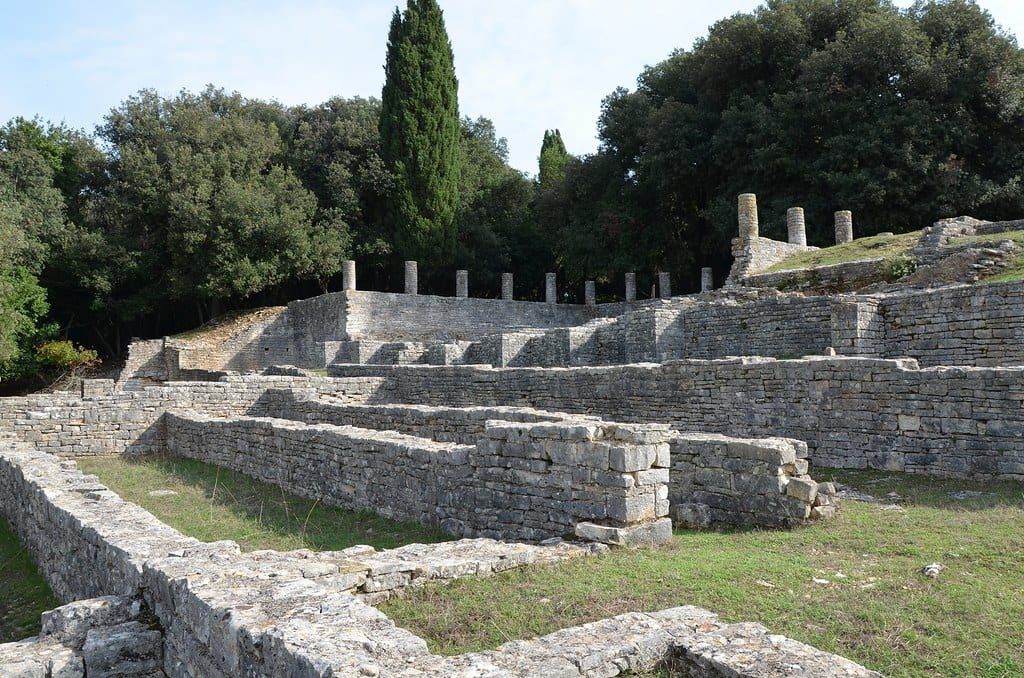
The villa rustica in Verige Bay dates to the 1st century BC and once held temples to Neptune, the Capitoline Triad and Venus, dressed in mosaics, frescoes and marble. Part of it now sits underwater, and the park runs a guided snorkeling tour of the submerged ruins.
Carbon-dated by Zagreb's Ruđer Bošković Institute in the 1960s, this tree split in a 1970s storm and was patched with concrete. It still produces about 30 kg of olives a year, pressed into 4.1 kg of extra-virgin oil. Its trunk alone is worth the walk from the harbour.
Book a sunset dolphin tour with dinner and drinks included, or swim at St. Jerolim Island — every trip has free 24-hour cancellation.
Swipe to see more
 Free Cancellation 3h
 Free Cancellation 3h
 Free Cancellation 5h
 Free Cancellation 3h 30min Free Cancellation 3h Free Cancellation 3h Free Cancellation 5h Free Cancellation 3h 30min Free Cancellation 3h Free Cancellation 5h
 Free Cancellation 3h
 Free Cancellation 2h
 Free Cancellation 3h
 Free Cancellation 3h Free Cancellation 3h Free Cancellation 3h
Aim for late May–June or September–October: the sea is warm enough for swimming, crowds are thinner, and from 1 October the adult ticket drops from €50 to €35. Skip January and February entirely — the park is closed to individual visitors.
May is the standout: warm weather, thinner crowds, and €35 shoulder-season tickets. April and May boats drop the 20:00 sailing, and March still runs the reduced winter schedule of two crossings a day.
Peak everything: €50 adult fare, twelve boats daily, and the year's biggest crowds plus August traffic and scarce parking in Fažana. redeemed by the €15 evening ticket, the Ulysses Theatre and the Podium festival.
Late September still gets eleven boats a day with warm sea and fewer people, and the adult price falls to €35 on 1 October. November drops to two sailings with the last boat back at 16:00.
January and February are the worst time: no individual tickets are sold at all, with visits arranged for groups only and on request. December offers just the 09:00 and 11:30 sailings, returning by 16:00.
Brijuni National Park opens every day of the year except January and February, when no individual tickets are sold at all and visits run for groups only, on request. Since the only way in is the park's own boat from Fažana, your real opening hours are the sailing times. From June to August, twelve boats a day leave between 09:00 and 22:00, with returns until 23:00. April, May, September and October drop the 20:00 departure. In November through March it's two sailings a day — 09:00 and 11:30 — with the last boat back at 16:00, so a winter day trip means an early start. In high summer the island information point shuts at 19:15.
| Category | Price |
|---|---|
| Guided excursion, adult | €50 from 1 June to 30 September; €35 from October to May |
| Guided excursion, students and over-65s | €40 (Jun–Sep); €30 (Oct–May) |
| Guided excursion, children 7–18 | €20 (Jun–Sep); €15 (Oct–May) |
| Children under 7 | Free |
| Self-guided ticket with Brijuni Pocket Guide app, adult | €40 (Jun–Sep); €30 (Oct–May) |
| Self-guided ticket, children 7–18 | €15 (Jun–Sep); €13 (Oct–May) |
| Evening entry from 6 pm (high season) | €15 |
| Dog ticket | €15 (dogs are barred from the safari park, tourist train and museums) |
One combined ticket covers the return boat from Fažana, the tourist train circuit, guide, safari park, museums, insurance and VAT. Booking is timed and strict — the crew boards you only within the hour printed on your ticket, and missing your departure means no refund and no rebooking. Buy online at shop.np-brijuni.hr or at the park office, Brionska 10 in Fažana. Reduced tickets (students, over-65s, visitors with a disability) aren't sold online; email [email protected] and collect at the office half an hour before departure. Hotel guests get 20% off, and groups of 25 or more qualify for discounts. A money-saving quirk: the €50 peak fare runs through 30 September inclusive, then drops to €35 on 1 October — shift a summer trip by a few days and a family saves real money.
For complete schedules and ticket prices, visit our Hours & Fees page.
Brijuni National Park sits on 14 islands 2 km off the Istrian coast, and the only way in is the park's own boat from the quay at Fažana, a small fishing town 8 km north-west of Pula — a 15-minute crossing, with the return boat included in your ticket.
📍 Brionska 10, Fažana, Croatia (Brijuni National Park ticket office and boat departure quay)
The park's boat is the only public access to the islands; private boats and cars are not transported. The crossing covers the 2 km of the Fažana Strait to Veliki Brijun in about 15 minutes each way. From June to August there are up to twelve sailings daily between 09:00 and 22:00, with returns until 23:00. Boarding is strictly tied to the hour printed on your ticket, so don't be late.
Pulapromet suburban bus line 21 connects Pula to Fažana, covering the 8.4 km in roughly 15–21 minutes for €2.20. Departures are irregular, with gaps of several hours mid-morning, so check the current timetable on the Fažana tourist board or Pulapromet website before relying on it. The bus drops you in Fažana, a short walk from the park office and quay at Brionska 10.
The Istrian Y motorway feeds down to Pula, and Fažana is signposted off it — about 8 km and 15 minutes from Pula. Park in Fažana itself and walk to the quay, since cars can't cross to the islands. Waterfront parking is scarce in August, so arrive early and expect to walk. The €12/day (€15 Jun–Sep) lot at Boraca 9 is reserved for hotel guests, not day visitors.
Pula Airport is the closest airport, 15 km from Fažana — roughly 30 minutes by road plus the 15-minute boat. From the terminal, take a shuttle or taxi to Pula's bus station (taxi fares aren't fixed), then catch line 21 to Fažana for €2.20. Rijeka's airport on Krk (120 km) and Trieste (150 km) are the next-nearest options, both requiring a longer drive down to Istria.
For detailed transport options and routes, visit our Directions page.
Timed entry is strict — the crew won't board you outside the hour printed on your ticket, and missing the boat means no refund or rebooking. Reserve at shop.np-brijuni.hr, since guided-tour language slots (English, German, Italian, Russian) sell out before seats do. In August, add an hour to your drive; the coast road and Fažana parking both jam up.
Student, over-65, and disability tickets (€30–€40 for the guided excursion) can't be bought online — the shop only sells full fares. Email [email protected] instead, then collect the ticket at the park office at Brionska 10 in Fažana half an hour before departure. Visitors with reduced mobility should also write to [email protected] ahead of time to arrange assistance.
Take the first boat (09:00 in high season) and head straight to the rental desk. The park keeps around 300 bicycles and admits that's sometimes not enough at peak times, so late arrivals walk. Early birds get the quiet west-coast bays of Veliki Brijun to themselves — flat, shaded by umbrella pines, and well worth the early alarm.
From 6 pm in July and August, entry drops to €15, with boats at 18:00, 19:00, and 20:00 and returns running until 23:00. You'll get a golden-hour walk and a swim at Saluga without the day crowds. Trade-off: the information point closes at 19:15, so museums will be shut.
The €50 adult fare runs through 30 September inclusive; from 1 October it drops to €35 — same eleven daily boats, thinner crowds, and the sea is still warm enough for swimming. Late September is the sweet spot if you want the full museum-and-train experience. Families of four should budget roughly €140 at peak rates, so the shift matters.
Swimwear is only allowed on designated beaches; board the boat, walk the promenades, or enter any café, restaurant, or hotel reception in a swimsuit and you may be turned away. Pack a cover-up for the crossing back from Saluga. Dog owners take note too: dogs need a €15 ticket and are barred from the safari park, tourist train, and museums — pick the self-guided option.
Pula's Roman amphitheatre anchors a compact old town of temples and Roman streets, and it doubles as a summer events venue — the Pula Film Festival runs open-air 'Cinema under the stars' here. It's the natural overnight base for a Brijuni day trip.
A pastel-coloured fishing town packed onto a peninsula around a Venetian bell tower, often called Istria's prettiest harbour. There's no direct park boat from here, so you drive to Fažana — an easy 35-minute run down the coast road.
Wild dirt trails for cycling, low cliffs for jumping into deep blue water, and empty coves at Istria's southernmost tip. Pair it with Brijuni when you want the untamed counterpart to the park's clipped meadows and museums.
Read what travelers share about their experience visiting Brijuni National Park — from practical tips to personal highlights.
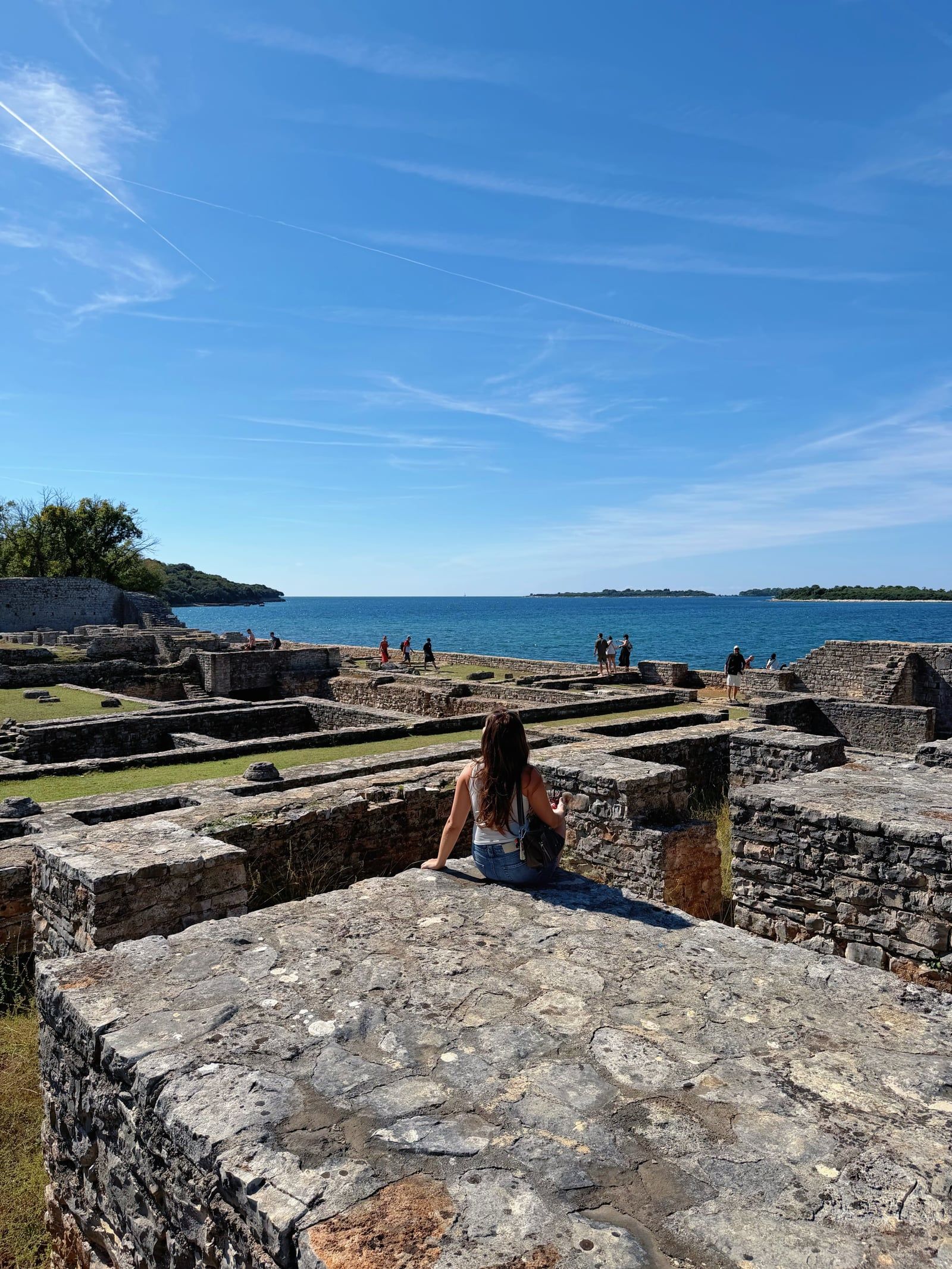
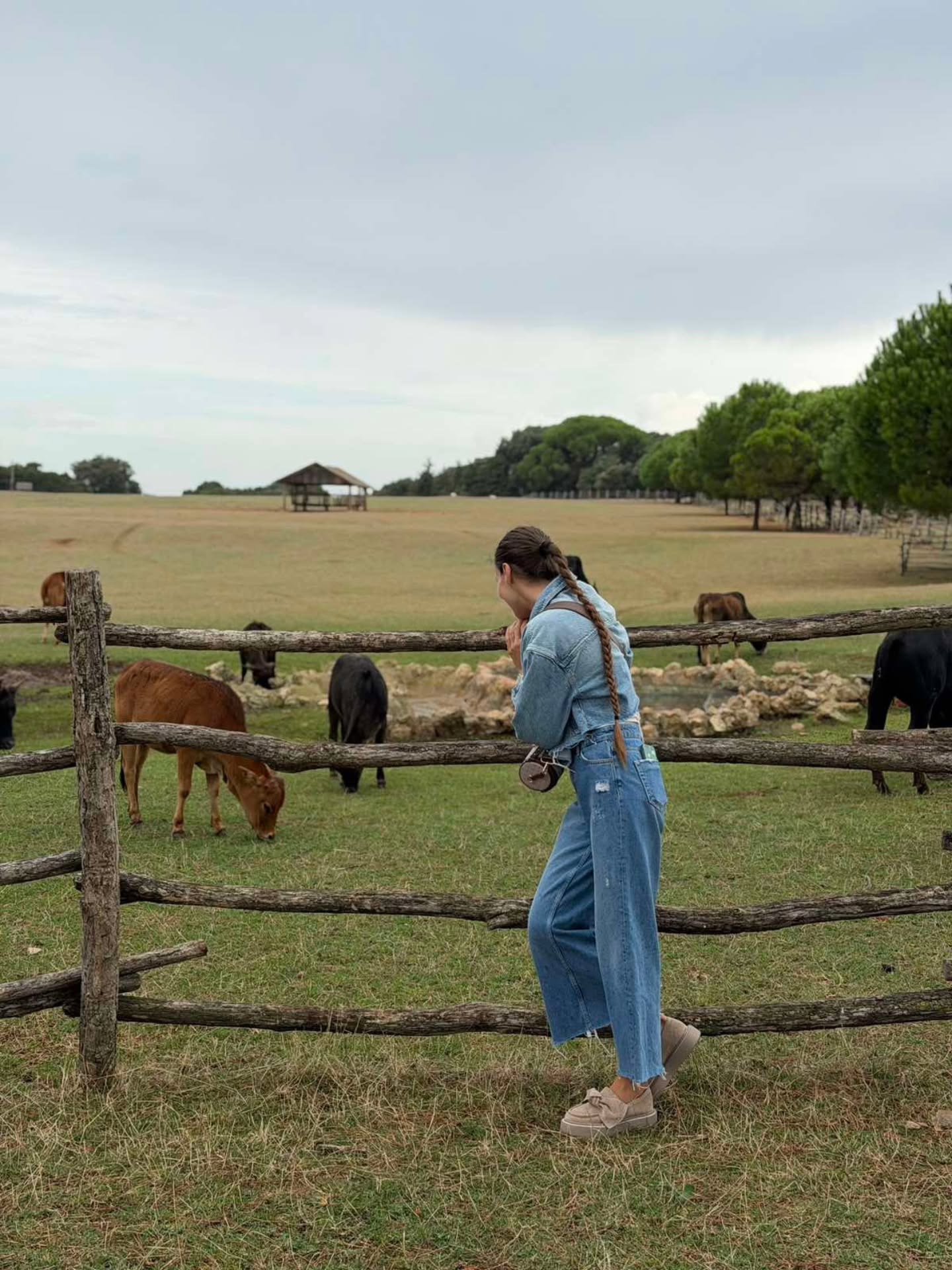
Planning advice, comparisons, and practical tips.
Zebras grazing a few hundred metres from a 1st-century Roman villa, an Indian elephant with a diplomatic pedigree, and albino peacocks strutting past…
Fourteen islands sit in the Fažana Strait, 2 km off the coast of Istria just north of Pula, and 78% of Brijuni National Park is water. Of its 3,395…
Snorkeling at Brijuni National Park splits into two experiences, and knowing the difference is the whole game. The famous part — drifting over the…
Fourteen islands sit two kilometres off the Istrian coast at Fažana, protected as a national park since 1983, and the only way onto any of them is by…
The guided excursion is €50 per adult from 1 June to 30 September, dropping to €35 from October to May. That single ticket covers the return boat from Fažana, the roughly one-hour tourist-train circuit, the safari park and the museums. Students and over-65s pay €40/€30, children 7–18 pay €20/€15, and under-7s go free.
The only public access is the park's own boat from Fažana, a 15-minute crossing of about 2 km — cars are not transported. Fažana sits 8 km from Pula (around 15 minutes by car), and Pulapromet bus line 21 runs the route for €2.20, though departures have mid-morning gaps of several hours. From Pula Airport, allow about 30 minutes by road plus the boat.
The standard guided excursion takes about 4 hours end to end, including the 15-minute crossing each way. Self-guided visitors who rent a bike or electric car usually stay 5–8 hours, and the €15 evening ticket (July–August, from 6 pm) runs until the last return boat at 23:00.
May–June and September–October combine warm sea for swimming with thinner crowds. The €50 peak fare holds through 30 September, then drops to €35 on 1 October — shifting your visit by a few days saves €15 per adult. Avoid January and February entirely: no individual tickets are sold, and visits are arranged only for groups on request.
Book online at shop.np-brijuni.hr before you travel — the crew boards you only within the hour printed on your ticket, and missing your departure means no refund and no rebooking. In summer it's the language slots on guided tours (Croatian, English, German, Italian, Russian) that sell out first, not boat capacity. One catch: reduced tickets for students, over-65s and visitors with a disability aren't sold online, so email [email protected] and collect at the park office (Brionska 10, Fažana) half an hour before departure.
It's one of the easier national-park days out in Croatia: Veliki Brijun is largely flat (the highest point on the whole archipelago is 55 m), the tourist train covers the long circuit, and benches and cafés sit near the harbour. Wheelchair users should expect gravel paths and may need help boarding the train, and remote sites like the dinosaur footprints at Cape Ploče are harder to reach. Contact the park at [email protected] in advance, and note that disability tickets are booked by email, not online.
Yes, with a €15 dog ticket, but dogs are barred from the safari park, the tourist train and the museums — so the self-guided option (€40 adults in high season, €30 off-season) suits dog owners best. Dogs must not roam freely, and aggressive dogs must wear a muzzle during boat transfers and sightseeing.
A cover-up over your swimsuit — the dress code forbids boarding the boat, walking the island, or entering restaurants, cafés and hotels in swimwear, and swimwear is allowed only on designated beaches like Saluga. Comfortable shoes help on the gravel paths, and take your trash home: the park is phasing out single-use plastics and removing on-island waste bins. Bring water and a hat for July–August heat.
Browse verified tours with free cancellation and instant confirmation.
Find Tours