Snorkeling at Brijuni National Park splits into two experiences, and knowing the difference is the whole game. The famous part — drifting over the submerged walls of a 1st-century Roman villa in Verige Bay — is only legal with a park guide, on a 45-minute tour that runs three days a week in summer and needs booking 48 hours ahead. The other part, independent snorkeling off pebbly shores with fish so tame they swarm around your mask, happens on the islet of St. Jerolim and at Saluga beach, no reservation required.
This guide covers both: what the underwater archaeology actually looks like, what it costs, how the booking rules work, and where you can legally swim on your own in a park where jumping in anywhere you like will get you stopped. Prices and schedules below come from the park's own listings; where sources disagree, I say so.
Why Brijuni Is One of Croatia's Best Snorkeling Spots
Two things make Brijuni's water different from every other Adriatic beach: a fishing ban that has been enforced since 1983, and Roman ruins sitting in a metre of water. The park was declared a national park and memorial site that year, and fishing in its waters is strictly regulated. The result is fish that behave like no fish you've met — they don't scatter when you kick toward them, and local specimens grow several times larger than the same species elsewhere on the coast. Snorkelers in Verige Bay routinely swim through schools of sea bream that part around them and re-form.
The water itself helps. Visibility in the northern Adriatic can stretch to 30 m, and summer sea temperatures around Brijuni average about 25°C — warm enough that most people skip wetsuits entirely in July and August. The seabed holds seagrass meadows, and among them live two of the Mediterranean's strictly protected shells: the noble pen shell, a fan-shaped mollusc that can stand a metre tall, and the smaller date shell. Look for them, photograph them, leave them alone. Bottlenose dolphins work the strait between the islands and Istria, and boat passengers spot them often enough that it's a genuine bonus rather than a lottery ticket.
The archaeology is the part no other Croatian snorkeling spot can copy. Because sea level was 0.6–1.5 m lower in Roman times, the shoreline structures of a 1st-century BC villa now lie submerged in the shallows of Verige Bay — a fishpond, a pier, a bathing area — and you float over them face-down. Europe has a handful of underwater archaeological parks; snorkeling one built from a Roman consul's private estate is rare anywhere, and in Croatia it exists only here.
Two Ways to Snorkel Brijuni: Guided Trail or Independent Swim Spots
Brijuni's rules are strict about where your face goes in the water. In Verige Bay, only accompanied snorkeling is permitted, because the submerged remains are protected archaeology — you can't free-swim the ruins on your own, full stop. Elsewhere in the park, swimming and snorkeling are allowed only in designated areas, and rangers do enforce it. Jumping off a random cliff on Veliki Brijun's west coast is not an option, however tempting the water looks from the tourist train.
That leaves two realistic plans. History-minded visitors and anyone organised enough to book ahead should take the official Verige underwater trail: 45 minutes with a guide, gear provided, over the actual Roman remains, from about €27 per person through a third-party operator that bundles park entry and the Fažana crossing. Spontaneous swimmers and families who just want water time should head to St. Jerolim, the peacock islet reached by water taxi or swim-stop boat tour from Fažana, or to Saluga, the only sanctioned beach on the main island.
| Guided Verige underwater trail | Independent: St. Jerolim / Saluga | |
|---|---|---|
| Best for | History lovers, confident swimmers, planners | Families, casual swimmers, last-minute visitors |
| Cost | From ~€27 pp all-in (operator listing) | Park ticket + €5–7 St. Jerolim landing fee |
| When | Jun 1–Sep 30, Mon/Wed/Fri, hourly 9:00–14:00 | Any day the park is open |
| Booking | At least 48 hours ahead | None — turn up and swim |
| What you see | Submerged Roman villa, vivarium, pier, tame fish | Pebbly coves, clear water, fish near shore |
Snorkeling the Verige Underwater Trail: What You'll Actually See
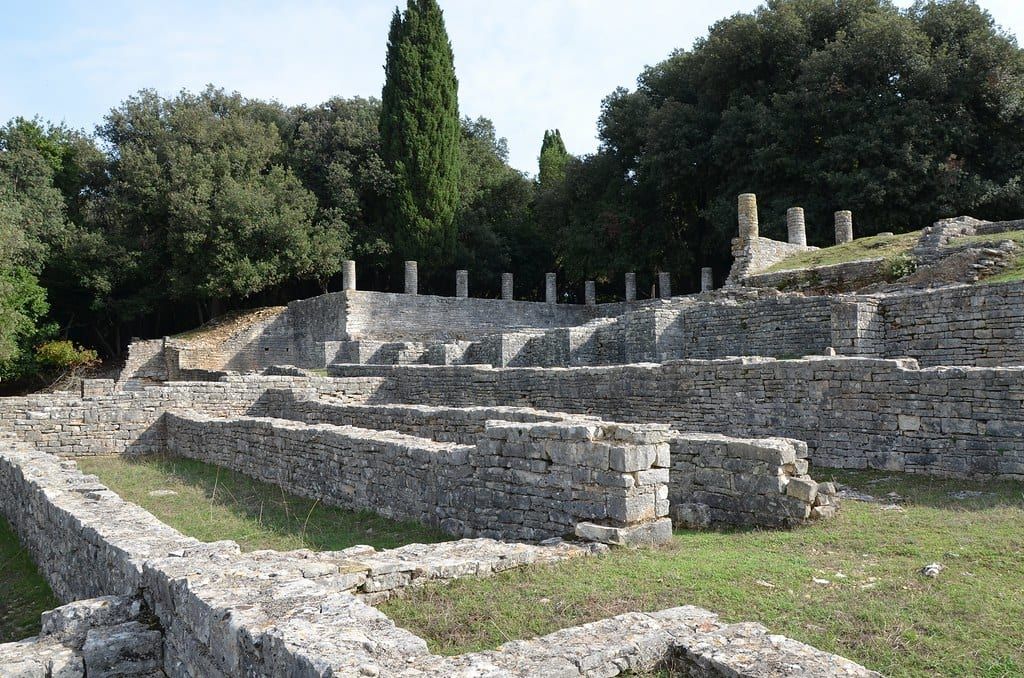
The trail runs 500 metres through Verige Bay, on the east coast of Veliki Brijun, and every structure along it belonged to one estate. In the 1st century BC, the Roman consul Caius Laecanius Bassus built a villa complex here that stretched roughly a kilometre along the shore, its buildings linked by a covered portico. The bay got its name from the chains — verige in Croatian, Val Catena in Latin — that once closed its entrance. The tourist train stops at the site's landward end; the snorkel tour takes you out over the parts the sea took back.
Why is Roman masonry underwater at all? Because the Adriatic has risen. Sea level in antiquity sat 0.6 to 1.5 m lower than today, so structures built at the villa's waterline — the pier, the bathing area, the outer walls of the fishpond — now sit in the shallows, close enough to the surface that a snorkeler can read their shapes without diving. Most of the trail is swimmable with your head up; the details reward putting your face in.
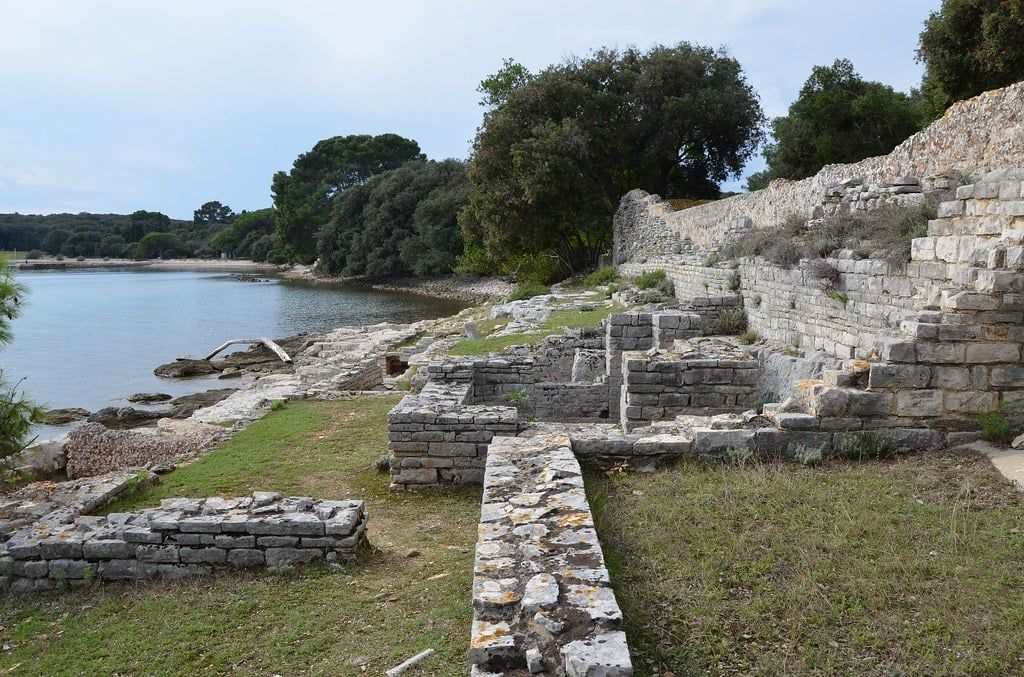
The vivarium: a Roman fishpond that still holds water
The star sight is the vivarium, a Roman fishpond that archaeologists describe as a unique specimen in the entire Adriatic. Its builders used pozzolana, a volcanic hydraulic concrete that sets underwater — the same material that built the dome of the Pantheon — and two thousand years later the basin's walls still hold water through the tidal cycle. You'll swim along its edges, fish swirling over the top of a structure designed to keep their ancestors captive for a consul's dinner table.
The sunken pier and the bathing area
Further along, enormous stone blocks mark a pier built without mortar — large boulders packed with pebbles, broken amphorae and roof tiles for ballast. Divers have recovered copper coins around it, and the wider seabed has given up pottery, glass and coin finds dating from the 1st to the 6th century, a stretch that covers the villa's whole life from Republic to Byzantium. A semicircular bathing area nearby is the easiest shape to make out from the surface; swim over it slowly and the curve becomes obvious.
The fish, and why they don't flee
The ruins would be half the attraction without the fish, but here they share top billing. Because no fishing has happened in the bay for four decades, the fish have lost their fear of humans entirely. Expect schools of sea bream and sea bass that drift toward you rather than away, salema porgy in grey-gold bars, sand steenbrass, two-banded and saddled seabream, and damselfish flickering over the stones. In the weedy patches look for ocellated wrasse, painted comber and the East Atlantic peacock wrasse, plus colourful blennies in the shallows. The one to give space: the black scorpionfish, a camouflaged, spined lump that sits motionless on the blocks. It grows large here and won't bother you if you don't grab it.
Back on the beach, the pebbles themselves are archaeology — amphora fragments, everyday ceramics, and small black-and-white stone cubes from Roman mosaics are mixed through the shingle. Crouch down and you'll spot them within a minute. The rule is absolute: look, photograph, leave everything where it lies. Taking even one mosaic cube is a protected-heritage offence.
Booking the Verige Snorkeling Tour: Price, Schedule, and Rules
Here is the full logistics picture for the guided trail, as published by the park. The season runs June 1 to September 30, with snorkeling tours on Mondays, Wednesdays and Fridays. Each tour lasts 45 minutes, and groups depart on the hour between 9:00 and 14:00. Groups are small — two to eight people — and children under 14 must be accompanied by a parent.
The price is where sources get messy. The park's own page points to a downloadable price list rather than quoting a figure; a third-party operator currently lists the full excursion from €27 per person, covering park entry, the Fažana ferry, transport to Verige Bay, mask, snorkel, fins, and a personal guide, with about two hours door-to-door. Prices have risen year to year as park admission itself has climbed, so treat €27 as the floor and check the current official price list before budgeting. If you buy the park ticket directly instead, tell the seller at purchase that you want the guided underwater trail in Verige Bay — that's how the time slot gets reserved.
The reservation rules are rigid. You must book at least 48 hours in advance through the park's online form or at ticket purchase, and cancellations need at least 24 hours' notice or you forfeit the slot. In peak weeks the small group sizes mean popular morning slots go first, so book the moment your travel dates are fixed rather than the day before.
One warning worth its own paragraph: older third-party listings still show the tour running Tuesdays and Thursdays for about an hour. The official schedule is Monday, Wednesday, Friday, 45 minutes. Days have changed between seasons before, so confirm on the park's own Verige snorkeling page before you plan your ferry day around it.
Where to Snorkel Independently: St. Jerolim, Saluga, and Swim-Stop Boat Tours
If the Verige tour is full, or you simply want more time in the water than 45 minutes allows, the park still delivers. Two designated spots — one islet, one beach — and a fleet of Fažana boats with swim stops make up the independent route.
St. Jerolim: the peacock islet
St. Jerolim is a small, uninhabited islet just off Veliki Brijun, and it's the classic independent snorkeling stop in the archipelago. Free-roaming peacocks patrol the pines — they are completely unbothered by swimmers — and a seaside restaurant serves lunch if you stay through midday. Glass-bottom boat tours from Fažana anchor here for roughly 2 to 2.5 hours of swimming and snorkeling off pebbly shores, where the water shallows out gradually and the same clarity and tame fish apply. It's also an "island without plastic": no single-use bottles, and you're asked to carry your rubbish back out.
The catch is the landing fee, payable on arrival and not included in boat tour prices. Expect roughly €5–7 per adult and €3–5 per child, and bring cash — sources differ slightly on the exact figure, and card payment on a small islet is not something to bet a family of five on. If you're weighing operators, the Brijuni boat trip guide breaks down the Fažana departure options route by route.
Saluga: the official beach on Veliki Brijun
Saluga is the only officially sanctioned swimming spot on the main island, fully serviced with food and drink facilities — convenient if your day is built around the tourist train and safari park and you want a dip in between. Be honest about expectations: the snorkeling here is modest compared with St. Jerolim, decent water and some fish near the rocks rather than ruins or seagrass meadows. Treat it as a swim that happens to have a mask on, not a destination for the snorkeling itself.
Swim-stop boat tours from Fažana
The laziest good option is a boat excursion that does the swimming logistics for you. Fažana's operators run panoramic trips and glass-bottom boats that combine a circuit of the archipelago with a snorkel stop at St. Jerolim, and private sailing charters — a four-hour discovery sail is typical — carry snorkeling gear and paddleboards and drop into quieter coves. Gear is included on the sailing trips; on the big-group boats, bring your own mask if you have one. The full Brijuni tour list lets you compare what each includes, and remember the St. Jerolim landing fee rides on top of every one of them.
Getting to Brijuni and the Best Time to Snorkel
Fažana, a small fishing town 8 km northwest of Pula, is the only gateway — there is no other public boat to the islands, and cars are not transported. From Pula, suburban bus line 21 runs the route in about 15–21 minutes for €2.20, though departures have mid-morning gaps of several hours, so check the Pulapromet timetable before relying on it. By car it's a 15-minute drive; parking near the Fažana quay is scarce in August, so arrive early. The full Pula-to-Brijuni options are worth comparing if you'd rather not drive.
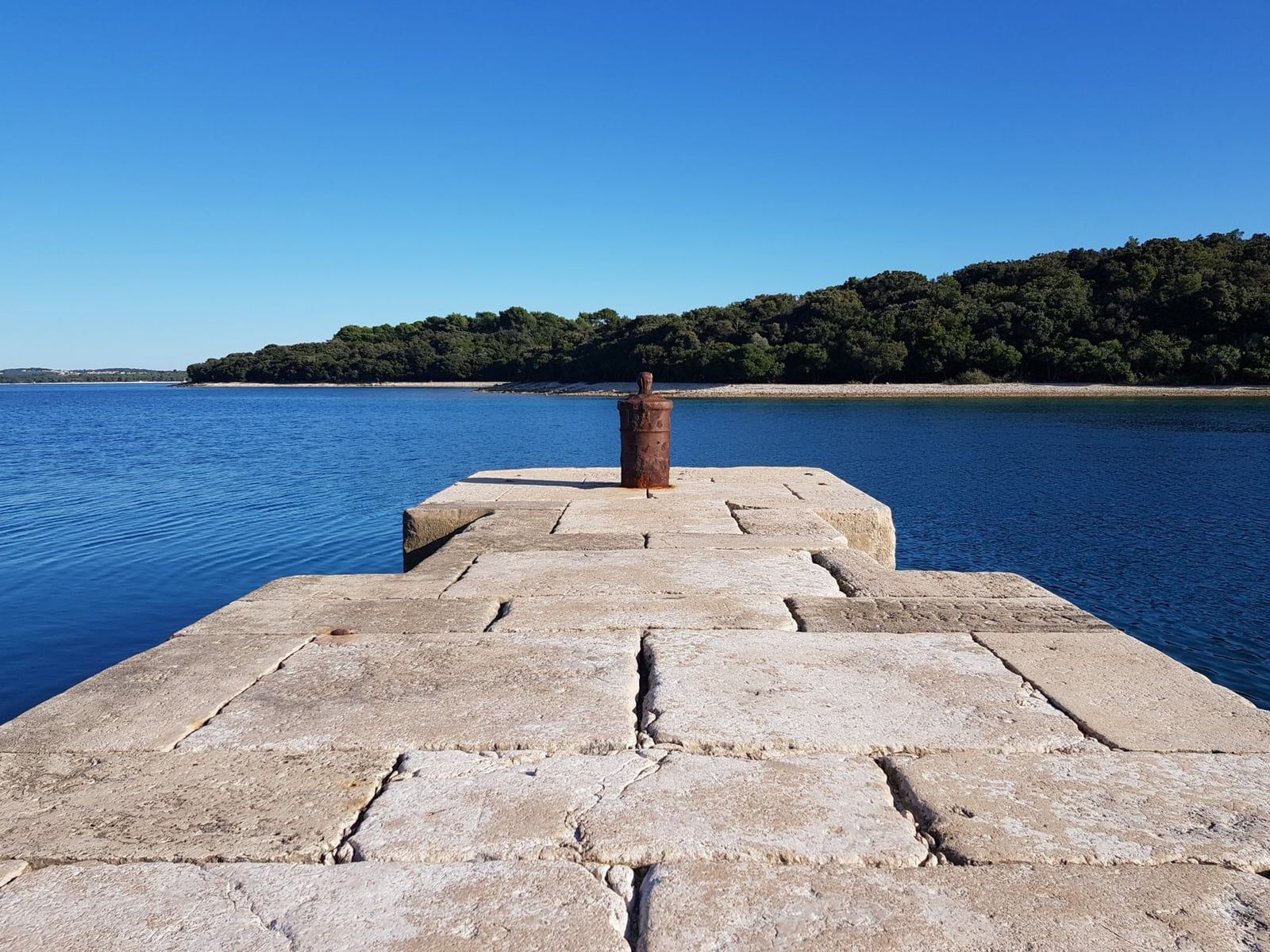
The park's own ferry crosses the 2 km to Veliki Brijun in 15 minutes, and the crossing is included in your ticket. In June, July and August there are up to twelve sailings daily from 9:00 to 22:00, returning until 23:00; shoulder months drop the late boats, and from November to March only two sailings a day run, with the last return at 16:00. Entry is strictly timed — the crew boards you only within the hour printed on your ticket, and missing it means no refund. In January and February, no individual tickets are sold at all.
On price: the guided excursion ticket — boat, island guide, tourist train, safari park, museums — costs adults €50 from June 1 to September 30 and €35 the rest of the year, with children 7–18 at €20/€15 and under-7s free. A self-guided ticket with the park's app runs €40/€30 for adults. Those figures have climbed year to year (a 2024 listing had the adult day ticket at €35/€14 for children, so prices rose in both seasons since), and €50 is the steepest standard admission of any Croatian national park. A family of four should budget roughly €140 for a summer day trip before any snorkeling add-on.
Timing the snorkeling itself is simple: the Verige tour only exists June 1–September 30, and that window doubles as the best water window — around 25°C at the peak, with sea temperatures across the year ranging 12–24°C near Brijuni. June and September are the smart picks: warm water, thinner crowds, and in late September eleven boats a day still run. Shift the same visit to October 1 and the adult ticket drops €15, but the Verige trail is finished for the season. If you want both the ruins and the cheap ticket, the first week of June is your slot — book the tour before you travel so the 48-hour rule can't bite you.
Park Rules, Gear, and Practical Snorkeling Tips
Brijuni is a protected area with rules that protect it, and the list of prohibitions is short enough to memorise. No picking or damaging plants, mushrooms or shells. No fishing. No feeding or disturbing animals — that includes the tame fish in Verige Bay, however much they beg. No swimming outside designated areas. No taking anything: amphora fragments and mosaic cubes count as protected heritage, and so does every shell on the beach. Smoking is banned outdoors except on restaurant and hotel terraces, and swimwear is only permitted on the designated beaches — you can't walk the island promenades or board the boat in a swimsuit, so pack a cover-up.
Gear is straightforward. The Verige tour provides mask, snorkel, fins and a professional guide, plus transport to the bay, so you need nothing but a swimsuit and a towel. Independent snorkelers should bring their own kit for fit — a basic mask-snorkel-fin package costs about €35 in Croatian shops, and cheap masks from beach stalls will fog and leak. Water shoes at around €10 are genuinely worth it here: the entries are pebbly, and sea urchins sit among the stones at St. Jerolim.
Safety is the usual short list: snorkel with a buddy, check conditions before you go in, and take sun protection seriously — an hour face-down on the surface burns shoulders that never feel hot in the water. Scuba diving is allowed in the park, but only with permission from the park administration, and anchoring is prohibited anywhere in its waters. Most visitors get their archaeology fix from the snorkel trail instead, which needs no permit beyond the booking.
Finally, pair the water time with the land. Veliki Brijun is an open-air museum — Roman villa floors, a Byzantine castrum, dinosaur footprints at Cape Ploče, a 1,600-year-old olive tree that still produces about 30 kg of olives a year. The standard excursion leaves several hours free after the tourist train circuit, enough for Saluga and the safari park in one day; the full things-to-do rundown shows how the pieces fit. Swim in the morning while the water is glassy, ruins after lunch, and let the peacocks have St. Jerolim by late afternoon.
Frequently Asked Questions
Can you snorkel in Brijuni National Park?
Yes, in two ways. The submerged Roman site in Verige Bay can only be snorkeled with a park guide on the official underwater trail, which runs June 1–September 30. Independent snorkeling is allowed only in designated swimming areas, mainly St. Jerolim islet and Saluga beach on Veliki Brijun.
How much does snorkeling in Brijuni cost?
The Verige underwater trail is listed from about €27 per person through a third-party operator, including park entry, the Fažana ferry, transport, gear and guide — verify the current price on the park's price list. Park entry itself costs €50 per adult in peak season (June–September) and €35 October–May, with children 7–18 at €20/€15. St. Jerolim adds a landing fee of roughly €5–7 per adult, cash only.
When does the Verige underwater trail run and how do I book?
The season runs June 1 to September 30, currently on Mondays, Wednesdays and Fridays, with 45-minute tours departing on the hour between 9:00 and 14:00. Reservations must be made at least 48 hours ahead via the park's online form or when buying your park ticket, and cancellations require 24 hours' notice. Some older third-party listings still show Tuesday/Thursday tours of about an hour — always confirm on the official park page.
Is Brijuni snorkeling suitable for beginners and kids?
Yes. The 500-metre trail sits in shallow water, is rated beginner level, and all gear plus a guide are provided. Children under 14 must be accompanied by a parent, and operators ask for adult supervision for children under 12.
Can you snorkel on your own in Brijuni?
Not at Verige Bay — the ruins are guide-only to protect the archaeology. Independent snorkeling is limited to designated swimming areas: St. Jerolim islet, reached by water taxi or swim-stop boat tour plus a landing fee, and Saluga, the only official beach on Veliki Brijun.
What will I see snorkeling in Brijuni?
On the Verige trail: the submerged remains of a 1st-century Roman villa, including a unique Adriatic fishpond built of pozzolana concrete, a sunken pier packed with amphorae and roof tiles, a semicircular bathing area, and seabed finds dating from the 1st to 6th century. Around all of it, unusually tame and large fish — sea bream, bass, salema porgy, black scorpionfish, wrasses and blennies. The protected noble pen shell lives in the park's waters, and dolphins occasionally pass through the strait.
Is scuba diving allowed in Brijuni National Park?
Yes, but only with permission from the park administration, and anchoring is prohibited in park waters. Conditions are best roughly May–September, when sea temperatures reach 24°C. For most visitors the guided snorkel trail covers the same archaeology without the permit process.