Zebras grazing a few hundred metres from a 1st-century Roman villa, an Indian elephant with a diplomatic pedigree, and albino peacocks strutting past the ticket gate — that's the Brijuni Safari Park, a 9-hectare animal collection on the northern meadows of Veliki Brijun, the main island of Croatia's Brijuni National Park. It has been here since 1978, and most of its residents are descended from animals given as state gifts to Yugoslav president Josip Broz Tito.
It's also the part of Brijuni that catches the most visitors off guard. People arrive expecting an African-style reserve and find a small, fenced historic park instead. This guide covers what the safari park actually is, which animals you'll meet and where they came from, and the logistics that decide how much time you get with them — because on the standard guided tour, that's about ten minutes.
What Is the Brijuni Safari Park — and What It Isn't
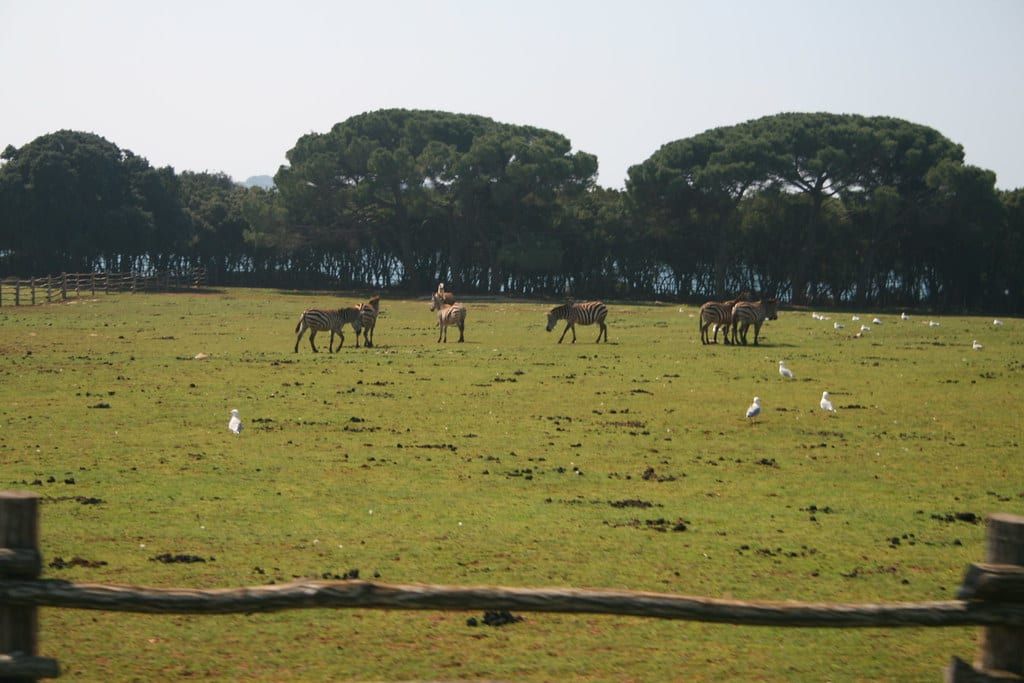
The Safari Park is a 9-hectare fenced area on the northern edge of Veliki Brijun, created in 1978 to house a collection of exotic and native herbivores inside what became a national park in 1983. About 80 animals live here today. Zebras, llamas, zebu and ostriches stand behind low wooden branch fences close enough to touch; only Lanka the elephant has a fully enclosed enclosure of her own.
What "safari" means on Brijuni is open paddocks and grassy meadows, not a drive-through reserve. There are no predators — the lions and other carnivores of the old collection were moved to the Zagreb and Osijek zoos in 1995 — and you see everything either from the tourist train or on foot along the fence line. This is the only safari-style animal park inside any Croatian national park, and its interest has as much to do with Cold War diplomacy as with wildlife.
So who is it worth it for? Families with children under about ten, and anyone curious about Tito's island. The animals are close, the terrain is flat, and the stories behind each species are genuinely odd. If you're coming for a big wildlife reserve, you'll be disappointed — a fairer comparison is a historic zoo enclosure with excellent scenery.
One honest caveat. The park is a small historic collection rather than a modern zoo, and some recent visitors have raised concerns about the conditions of Lanka's enclosure. If animal welfare weighs heavily in your travel decisions, know that going in. Nothing here resembles a safari park built to current zoo standards.
The Story Behind the Animals: Tito's Diplomatic Gifts
Brijuni's animals exist because Tito did. The islands were his state summer residence, and between the 1950s and his death in 1980 he received 90 visits from presidents, kings and tsars of 60 states — several of whom arrived with animals. The July 1956 meeting of Tito, Nasser and Nehru on Brijuni produced the Brijuni Declaration, groundwork for the Non-Aligned Movement; Nehru apparently came back with more than rhetoric.
The paper trail survives. The zebu — the sacred Indian humped cow — was Nehru's gift, settled on the island in 1959. The steppe and mountain zebras arrived from Ahmed Sékou Touré, president of Guinea, in 1960 and 1961. Lanka, the Indian elephant, came from Prime Minister Indira Gandhi in 1972. The animals you see now are largely their descendants, since the enclosed park was formally set up in 1978 as the collection grew.
The 1995 clear-out reshaped the place: carnivores went to Zagreb and Osijek, leaving the herbivore herd you see today. The standard guided route also passes the Tito exhibitions on the island — photo displays and preserved trophy animals — which give the safari park its context. Tito's dark-green 1953 Cadillac, a gift from Croatian immigrants in Canada that carried guests like Nasser and Haile Selassie until 1979, sits nearby.
Koki belongs to the same era. The yellow-crested cockatoo was Tito's gift to his granddaughter for her ninth birthday; he's now around 70 years old, still speaks, and greets visitors. The species can live to a century, so he may well outlast the rest of the story.
Meet the Animals: From Lanka the Elephant to Istrian Donkeys
Lanka is the star, and she knows it. The Indian elephant — Indira Gandhi's 1972 gift — has her own proper enclosure at the park, and the on-site café is named after her (Caffe bar Sony & Lanka, open 9:45–17:00). Visitors of a certain age remember her from Yugoslav-era school trips; she's been the park's most photographed resident for five decades.
The entrance sets the tone. Ostriches and peacocks — including white albino peacocks — greet you on the right; llamas stroll on the left. Further in, the zebras and zebu share the open meadows, and the fences stay low throughout. You'll be close to everything, which cuts both ways: it's great with kids, and it tempts people to reach through the wire (more on why not to, below).
A corner of the park is set aside as the ethno park, a recreated Istrian homestead with native breeds: boškarin cattle (the Istrian ox, nearly lost in the 1990s and now revived), Istrian pramenka sheep, donkeys, goats, pygmy goats and Shetland ponies. It's the counterweight to the exotic species — the local farm animals that would have stood on these fields before any president did.
From late spring through the warm months, the park also hosts recovering sea turtles from the Sea Turtle Rescue Center run by Pula's Marine Educational Center. The lagoon basins give injured turtles a quiet place to convalesce before release — ask staff which basins are occupied, since the patients rotate.
And the safari park is only the fenced part. Fallow deer, axis deer and mouflon — introduced as game animals in the early 20th century — roam Veliki Brijun freely, along with hares and semi-tame peacocks. You'll spot deer on the train ride north and grazing near the Roman ruins in Verige Bay, often closer than the animals you paid to see.
How to Get to the Safari Park (Boat, Train, Bike or Buggy)
There's no way to visit the safari park on its own — the island has no bridge, and the park's own boats from Fažana are the only public way in. The crossing takes 15 minutes to cover the 2 km of the Fažana Strait. For the full picture on reaching the departure point, see our guide to getting to Brijuni National Park; the short version follows.
Fažana sits about 8 km northwest of Pula. Pulapromet's suburban bus line 21 connects the two in 15–21 minutes for €2.20, but departures are irregular — gaps of several hours mid-morning — so check the current timetable before relying on it. By car it's a 15-minute drive from Pula, with scarce waterfront parking in August; arrive early and expect to walk. If you'd rather skip the logistics entirely, organised day trips from Pula handle the transfer and the timed ticket for you.
On the island, how you reach the safari park depends entirely on which ticket you bought.
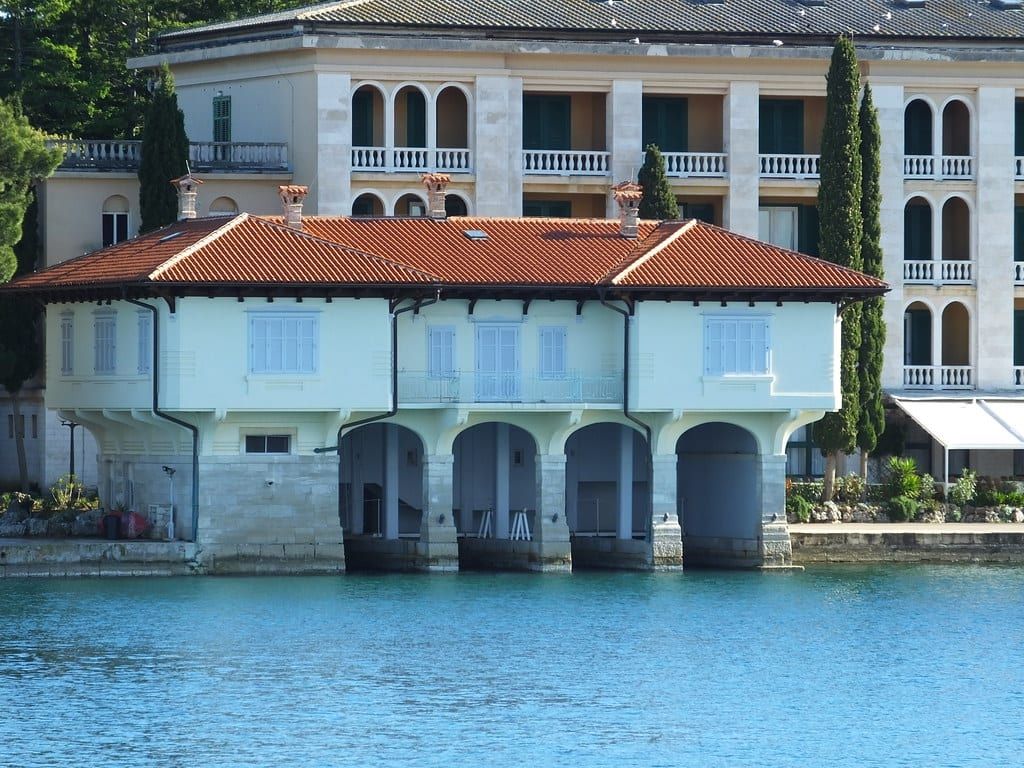
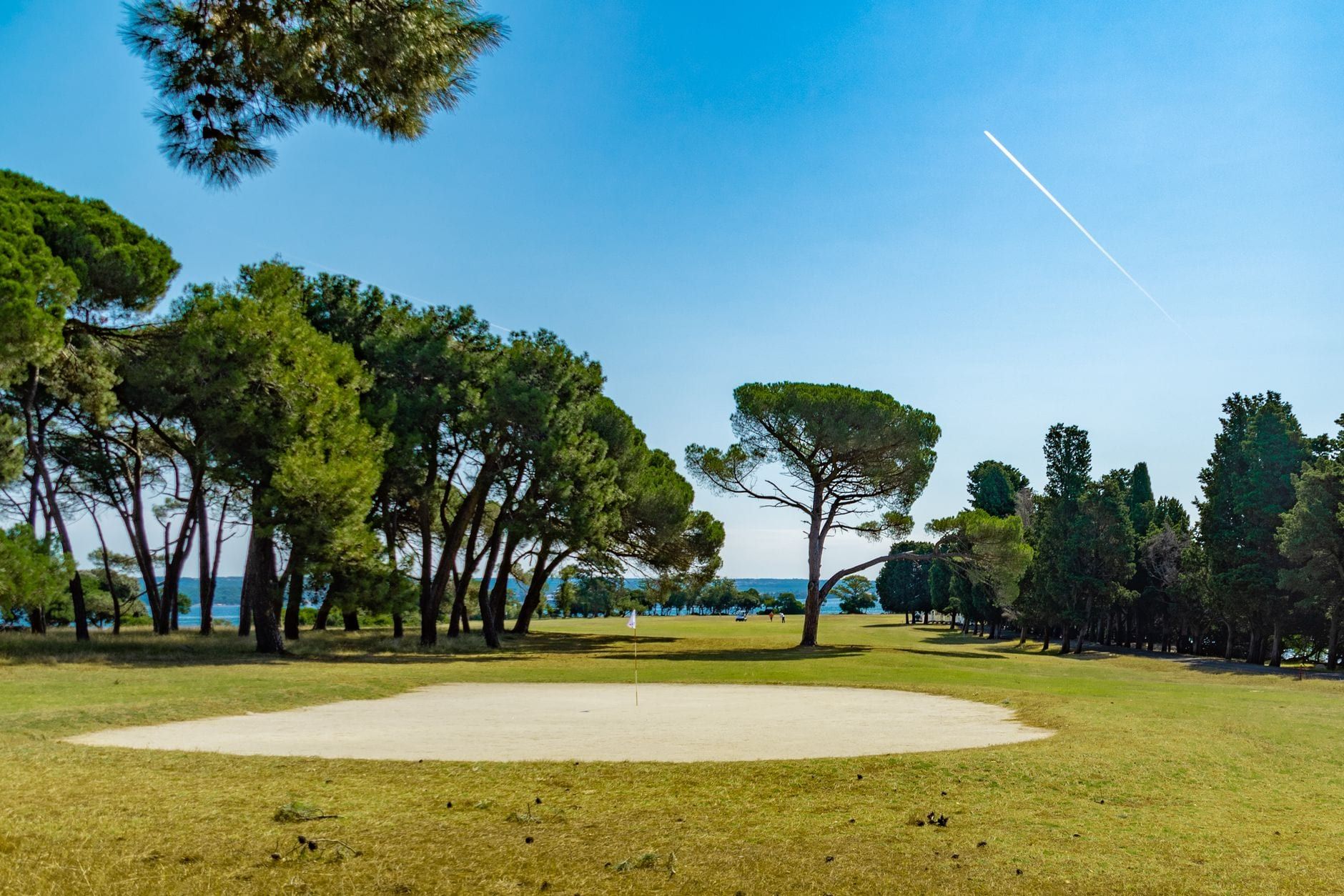
Guided-excursion visitors ride the tourist train. The roughly hour-long circuit runs north past the golf course to the safari park, pauses there for about ten minutes, then returns along the west coast with a stop at the Roman villa in Verige Bay before finishing on foot through the exhibitions, St German's church and the boathouse. Tours run in Croatian, English, German and Italian (Russian in season). Ten minutes is enough to see Lanka and the zebras from the train-side fence — not enough to walk the whole park or find the turtles.
Self-guided visitors get far more time. The safari park is about a 30-minute walk from the hotel and harbour area at the island's southern end, and you can enter on foot and stay as long as you like — an hour is a comfortable budget. Faster options: the park rents around 300 bicycles (they run out at peak times, so head to the rental desk on the first boat) and electric golf buggies, which require a driving licence. Bringing your own bike or scooter needs at least 24 hours' notice and a fee, and boat capacity for bikes is limited.
That trade — ten minutes by train versus an hour on your own — is the single most important decision of the day. Families with small children often do fine on the train; anyone who actually came for the animals should go self-guided.
Tickets, Prices and Opening Hours
Two ticket formats cover the safari park, and both include the return boat from Fažana. The guided excursion adds a licensed guide, the tourist train, the safari park, the exhibitions, the Mediterranean garden and the old olive tree. The cheaper self-guided "Brijuni Pocket Guide" ticket gives you the boat and the sights on your phone — but no train.
| Ticket | 1 Jun – 30 Sep | Oct – May |
|---|---|---|
| Guided excursion, adult | €50 | €35 |
| Guided, child 7–18 | €20 | €15 |
| Guided, student / 65+ | €40 | €30 |
| Self-guided Pocket Guide, adult | €40 | €30 |
| Self-guided, child 7–18 | €15 | €13 |
| Evening entry from 6 pm (high season) | €15 | — |
Children under 7 go free, and a dog ticket costs €15. Hotel guests on the island get 20% off, and groups of 25 or more get a discount. Reduced tickets for students, over-65s and visitors with a disability are not sold online — email [email protected] and collect at the park office at Brionska 10 in Fažana, half an hour before departure. Everyone else books at shop.np-brijuni.hr or at the same office.
The safari park itself keeps long hours — 9:00 to 19:30 on the park's published monthly working-hours sheet — but your visit is bounded by the boat timetable, not the gate. June through August runs up to twelve sailings daily between 09:00 and 22:00, with returns until 23:00. April, May, September and October drop the 20:00 boat. November to March offers just two sailings (09:00 and 11:30) with the last return at 16:00. Our hours and entry fees guide carries the current sheet.
Two traps. Tickets carry a fixed departure hour and the crew will not board you earlier or later — miss it and there's no refund and no rebooking, which bites hardest when you're driving in from Rovinj or Poreč in August traffic. And in January and February, no individual tickets are sold at all; the park takes groups only, on request.
Timing-wise, May–June and September–October hit the sweet spot of warm weather, thinner crowds and (from 1 October) the €35 fare. Budget about four hours end to end for the guided excursion, and five to eight for a self-guided day with the safari park, museums and cycling.
Visiting with Kids — and Why Dogs Stay Behind
Brijuni is one of the easiest national-park days out in Croatia for children. The crossing is 15 minutes, the terrain is flat, the train does the long distances, and the animals are close enough at fence-line to hold a five-year-old's attention without binoculars. Free-roaming peacocks and the talking cockatoo Koki do the rest. Under-7s travel free and 7-to-18-year-olds pay roughly half price.
Two rules matter at the fences. Feeding the animals is prohibited across the whole national park — the animals are on managed diets and human food harms them. And don't reach through or try to pet: zebras, llamas and ostriches stand behind low branch fences close enough to touch, but they're large animals that bite. Look, photograph, keep hands to yourself. A stroller manages the gravel paths fine; wheelchairs and reduced-mobility visitors should email the park in advance ([email protected]), since train boarding may need assistance.
Dogs are the group that needs to plan around the safari park, not for it. A dog can come to the island with a €15 ticket and a leash, but is barred from the safari park itself, the tourist train and the museums — which effectively rules out the guided excursion. Therapy and assistance dogs are the exception for visitor buildings. If you're travelling with a dog, book the self-guided ticket, walk the island's paths and accept that the zebras are off-limits this trip.
Planning Your Day Around the Safari Park
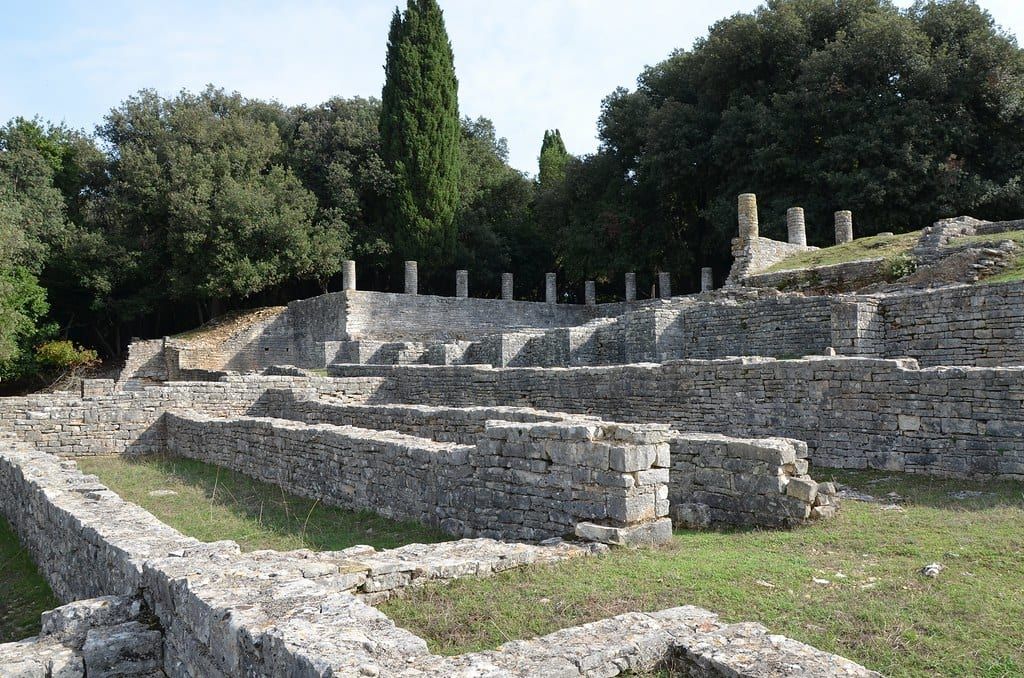
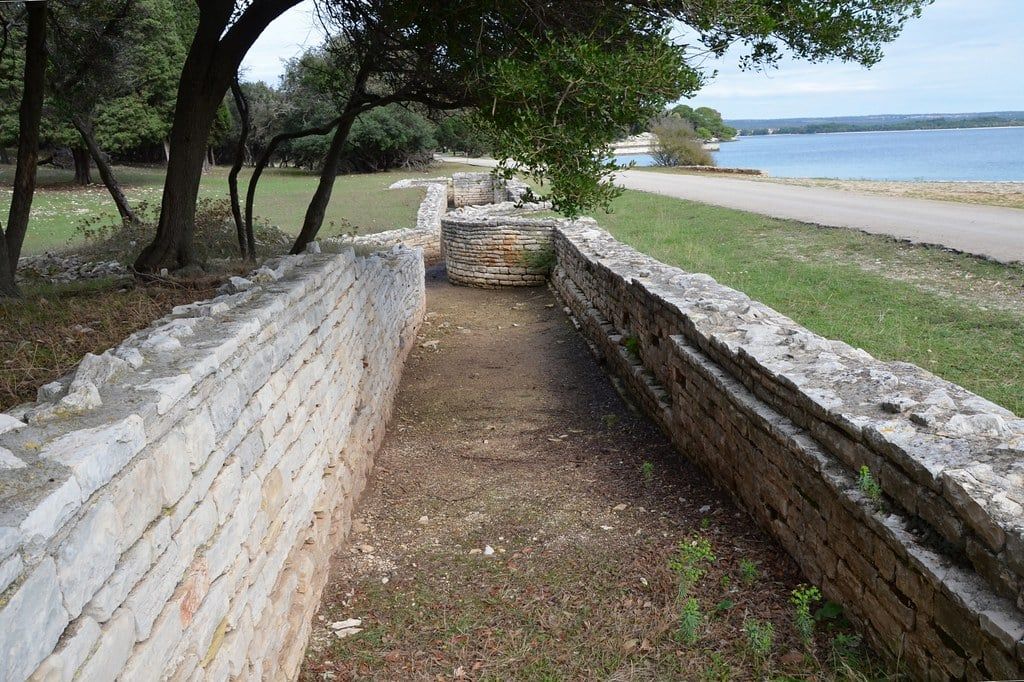
Ten minutes or an hour, the safari park is one stop on a Veliki Brijun day — so build the day around what else the island holds. The train tour already bundles in the Roman villa rustica at Verige Bay, a 1st-century BC complex with temples to Neptune, the Capitoline Triad and Venus, plus the Tito exhibitions, St German's church and the boathouse. None of those need extra planning.
Self-guided visitors can add the rest. The dinosaur footprints — more than 200 left between 130 and 100 million years ago, viewable at Cape Ploče and Cape Vrbanj with a life-size theropod reconstruction standing over them — are a 20-minute ride from the harbour by bike. The 1,600-year-old olive tree still produces about 30 kg of olives a year, pressed into roughly 4 kg of extra-virgin oil. The Byzantine castrum in Dobrika Bay, with St Mary's Basilica and the Church of St Peter beside it, sits near the landing quay. Our rundown of things to do in Brijuni National Park maps them all.
A realistic split: on the guided excursion your safari-park exposure is the train's ten-minute pause inside a four-hour slot. Self-guided, give the park a full hour of a five-to-eight-hour day and pair it with a swim — Saluga beach on Veliki Brijun, or the car-free island of St Jerolim, reached by a short hop, with its underwater educational trail. The broader boat trip to Brijuni deserves the extra hours if you have them.
Practical essentials for the safari park itself: there's almost no shade on the northern meadows, so bring hats and water. There are no shops or ATMs anywhere on the island — pack snacks, or plan on the café at the safari park and the harbour restaurants. And if you're weighing guided tours against independent travel, book either well ahead in summer; language slots on the guided tours are the first thing to sell out.
Frequently asked questions
Can you visit the Brijuni Safari Park without a guided tour?
Yes. The self-guided "Brijuni Pocket Guide" ticket includes the boat and island access but not the tourist train; from the landing quay it's roughly a 30-minute walk (or a rental bike/buggy ride) north to the safari park, where you can stay as long as you like. On the guided excursion, the train pauses at the park for about ten minutes.
How much do Brijuni National Park tickets cost?
The guided excursion costs €50 per adult from 1 June to 30 September and €35 from October to May; children 7–18 pay €20/€15, under-7s are free, and students and over-65s pay €40/€30. The self-guided Pocket Guide ticket is €40/€30 for adults and €15/€13 for children. Every ticket includes the return boat from Fažana; a dog ticket is €15.
Where did the animals in the Brijuni Safari Park come from?
Most arrived as state gifts to President Tito: the zebu from India's Nehru in 1959, zebras from Guinea's Sékou Touré in 1960–61, and the elephant Lanka from Indira Gandhi in 1972. The enclosed safari park was set up in 1978, and today's animals are largely descendants of the gift animals.
Is the Brijuni Safari Park a real safari — and is it worth visiting?
Not a safari in the African sense. It's 9 fenced hectares at the northern end of Veliki Brijun with about 80 herbivores, no predators, and viewing from the tourist train or on foot behind low fences. It's worth it for families and for the Cold War gift history; come expecting a big wildlife reserve and you'll be disappointed.
Can you feed or touch the animals?
No. Feeding is prohibited across the national park, and although zebras, llamas and ostriches stand behind low fences close enough to touch, they are large animals that can bite. Look and photograph — don't reach through.
Are dogs allowed in the Brijuni Safari Park?
No. Dogs can enter permitted outdoor areas of the island with a €15 ticket and a leash, but they're barred from the safari park, the tourist train and the museums — so dog owners should choose the self-guided format. Therapy and assistance dogs are the exception for visitor buildings.
What animals live in the Brijuni Safari Park?
Lanka the elephant, steppe and mountain zebras, llamas, zebu, ostriches and peacocks including white albinos. The ethno park corner holds boškarin cattle, Istrian pramenka sheep, donkeys, goats, pygmy goats and Shetland ponies. Injured sea turtles from Pula's rescue centre recover there in the warm months, and fallow deer, axis deer and mouflon roam the island freely.
How long do you need at the safari park?
On the guided excursion, the train stops about ten minutes. Going independently, an hour is comfortable within a five-to-eight-hour island day. The standard guided excursion runs about four hours end to end.